What His Mother Left Behind
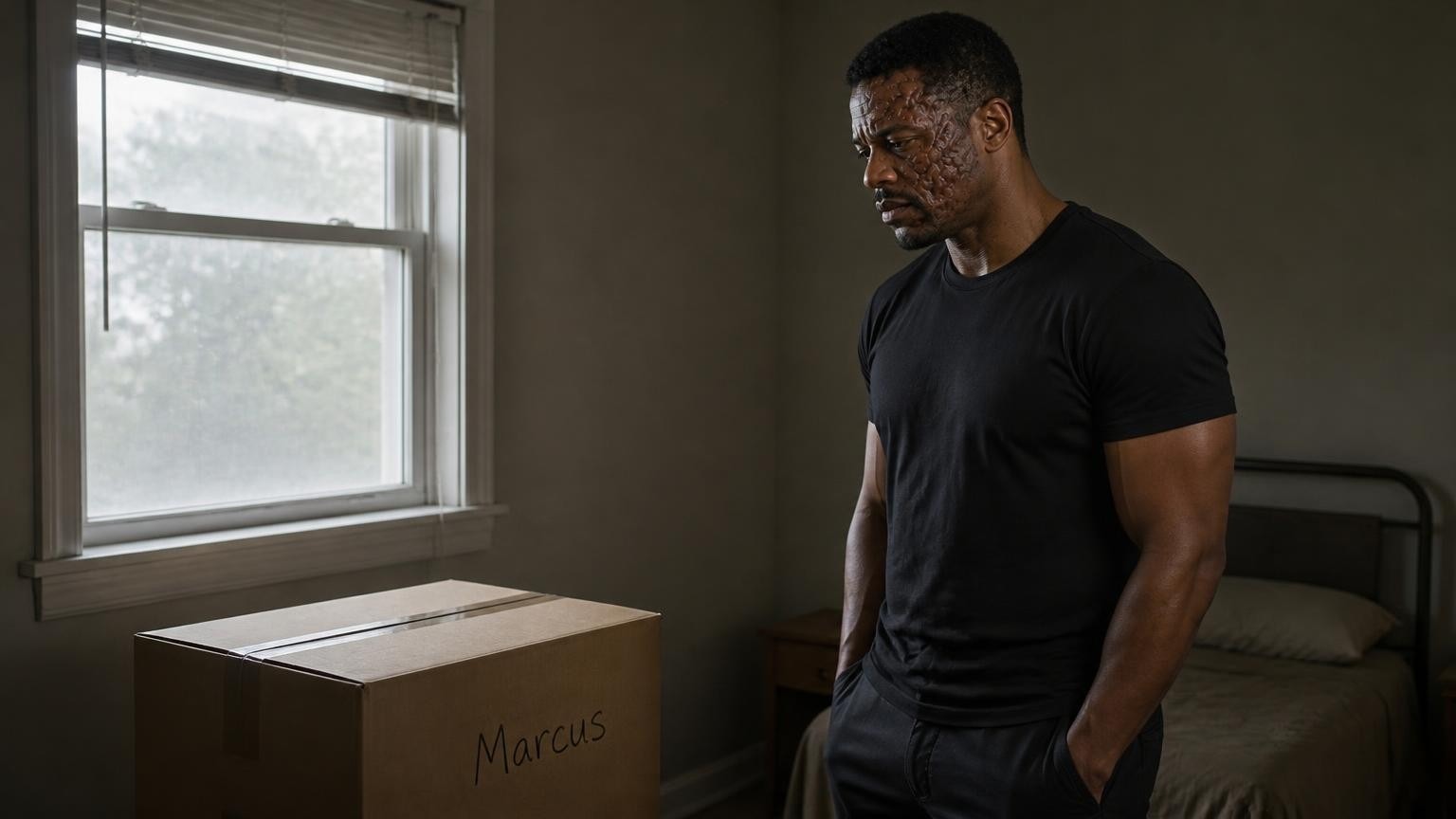
Six months after his mother died, Marcus Hale still had not unpacked the last box from her house.
It sat beneath the window in his spare room, sealed with two tired strips of brown tape. His sister had written his name across the top in black marker while they divided the remains of their parents’ lives between them. She took their mother’s jewelry, the family Bible with its softened leather cover, and the albums containing photographs neither of them could yet look through without stopping. Marcus took his father’s service memorabilia, several old letters, and the wooden case his mother had kept locked in the back of a closet.
Their father had died when Marcus was a teenager. For years afterward, their mother had been the fixed point in the family—the person who remembered appointments, answered late-night telephone calls, and quietly appeared whenever either of her children insisted they were fine. After the fire, when Marcus awakened inside a body he barely recognized, she became more than his mother. She became his witness to recovery.
She sat beside him through surgeries and skin grafts. She learned when to help and when helping would make him feel helpless. She never pretended not to notice his scars, but she never allowed them to become the only thing she saw. When strangers stared at the damaged side of his face, she continued the conversation as though they had not earned the power to interrupt it.
Then she was gone.
Marcus and his sister settled the estate together because practical work gave grief somewhere to stand. They signed forms, emptied drawers, chose what to donate, and argued gently over objects neither of them truly wanted but neither could bear to discard. His sister offered to keep the locked wooden case. Marcus said it had belonged to their father and should come home with him.
He placed it in the spare room and did not open it for almost half a year.
The Voice in the House
Grief did not arrive in Marcus as one clean emotion. It entered through everything already broken.
Five years earlier, fire had taken his wife, Tessa, and their unborn child. Marcus had carried Tessa through smoke until burning debris brought him down near the doorway. Firefighters pulled them both outside, but only Marcus survived. More than sixty percent of his body was burned. One side of his face carried the visible history of that night. The rest of it lived where no one could see.
His mother had helped him separate survival from betrayal. After her death, the two began to fuse again.
At first, Marcus heard Tessa only when he was falling asleep. Her voice seemed to rise from the border between memory and dreaming, saying his name the way she once had when waking him for work. He knew she was dead. He knew the mind could reproduce a voice with terrible accuracy. He would sit up, turn on the lamp, and wait for his breathing to settle.
Then the voice changed.
“Why did you leave me in there?”
Marcus began sleeping with the television on. When that failed, he stopped sleeping for more than an hour or two at a time. Some nights he smelled smoke in rooms where nothing was burning. At the edge of his vision, an ordinary doorway became the blackened entrance to the home he had lost. He would blink and find the hallway empty again.
He understood enough to be frightened by what was happening—and was frightened enough to hide it.
Mr. Bennett
Thomas Bennett had been assigned to Marcus during the long transition from inpatient burn care to rehabilitation. He was a licensed clinical social worker as well as Marcus’s case manager, responsible for coordinating treatment, appointments, and the practical complications that follow catastrophic injury. Over five years, their scheduled visits had become less frequent. Bennett still called from time to time, and Marcus usually answered.
After the funeral, Marcus stopped returning calls.
Bennett arrived one gray afternoon carrying no clipboard and asking for no explanation. Marcus allowed him inside because refusing would have required more energy than opening the door.
“You haven’t answered the telephone lately,” Bennett said. “The curtains are closed, and you look like you haven’t slept. Tell me what the nights have been like.”
Marcus looked toward the kitchen. For a moment, Bennett thought he had not heard the question.
“Sometimes I hear her.”
“Your mother?”
“Tessa.”
Bennett did not look toward the empty kitchen. He kept his voice quiet.
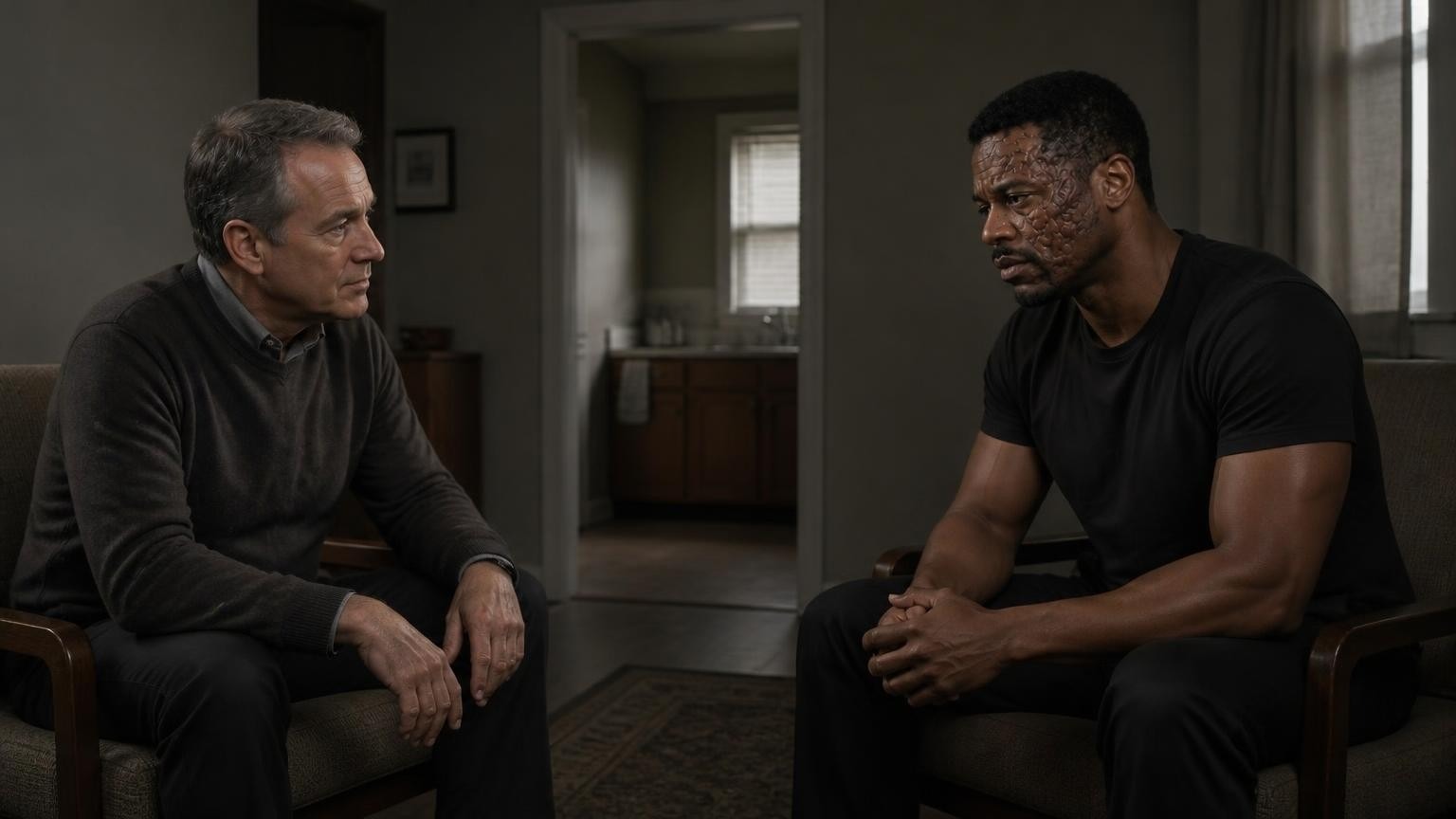
“When you say you hear Tessa, is it like remembering her voice, or does it sound as clear and outside you as my voice does now?”
“Like she’s in the room.”
“When did that begin?”
“After Mom died. At first, it was only when I was almost asleep. Now it happens when I’m awake.”
“What does she say?”
Marcus’s jaw tightened. Bennett waited.
“She asks why I left her in the house.”
Bennett leaned forward, but he did not argue with him.
“That sounds frightening. And painful, because part of you has blamed yourself for a long time. I don’t hear Tessa, so I can’t tell you that she is standing here. But I believe that you hear her, Marcus. I believe it feels completely real.”
Marcus studied him, searching for pity and finding concern instead.
“Has the voice ever told you to hurt yourself?”
“No.”
“Have you been thinking that you would rather not wake up?”
Marcus looked away.
“I’m tired of waking up. That isn’t the same thing.”
Bennett did not accept the distinction, but he did not punish Marcus for making it.
“I’m not here to take control away from you. I’m asking you to let me bring another person onto the team—someone who understands what grief, trauma, pain, medication, and lack of sleep can do to perception. We don’t have to decide today what the voice means. We need to help you carry what it is doing to you.”
“You think she’s a symptom.”
“I think Tessa mattered so much that losing her changed every part of your life. I think losing your mother reopened wounds you were still learning to live with. And I think you shouldn’t be alone with this.”
“You can’t understand it.”
It was the last complete sentence Marcus spoke during the visit.
Bennett called twice the following week. Marcus watched the name appear on his telephone and let it disappear. His sister called too. To her, he sent a message saying he was exhausted and would speak with her soon.
Soon became another word for not tonight.
The Last Box
On the final night, rain pressed softly against the windows. Marcus had not planned for that night to become different from the others. Crisis rarely announces itself with the clarity people later assign to it. It gathers quietly—one loss leaning against another until the structure can no longer hold.
Tessa’s voice had followed him through the house since sunset.
“Why did you leave me?”
He told the empty room that he had not left her. He had entered the fire. He had carried her. He had burned with her. The voice asked the question again.
His mother’s photograph stood on the mantel. His father’s service pin rested beside it. Marcus looked at both of them and felt the terrible logic of his illness arrange the dead into evidence.
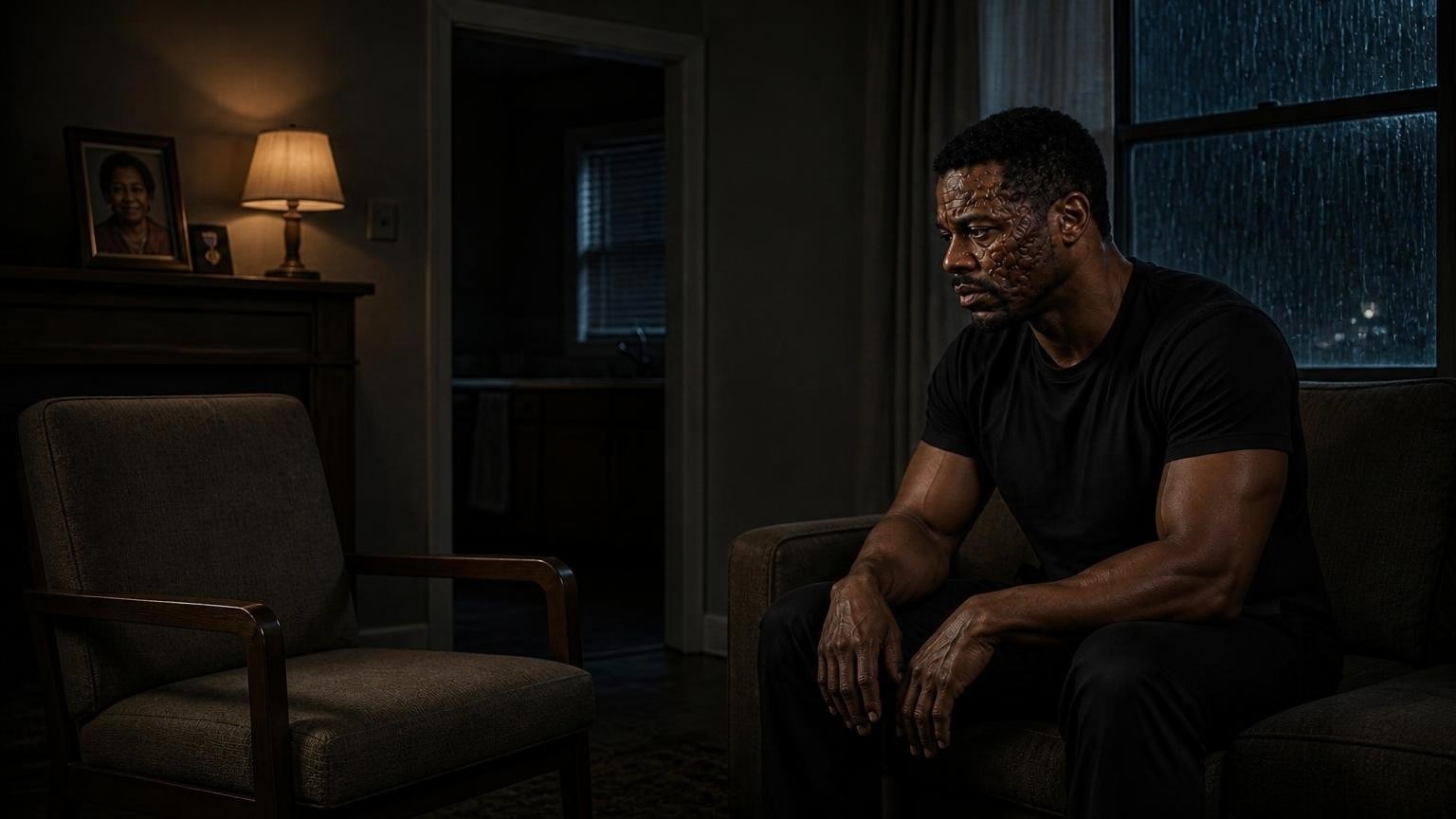
His father was gone. Tessa and the baby were gone. His mother was gone. Everyone who came close to him disappeared.
The thought did not feel like a thought anymore. It felt like a verdict.
He entered the spare room and opened the last box.
Inside were his father’s letters, an old wallet, several photographs in paper envelopes, and the wooden case. The key was taped beneath it exactly where his mother had always kept spare keys. Marcus opened the case and found his father’s old gun resting beside a small box of ammunition. He had never fired it. He did not know whether his father had used it in the years before his death or whether his mother had ever opened the case after placing it in the closet.
Marcus carried it into the darkened living room.
There was no single final thought. There was Tessa’s voice, his mother’s empty chair, the remembered heat of the fire, and a conviction that his sister would eventually recover from losing one more person. Depression translated his absence into kindness. It told him that disappearing was the last useful thing he could do.
Marcus closed his eyes.
The sound he expected never came.
There was only a small, empty click.
Not Yet
Marcus opened his eyes.
A woman stood directly before him.
She was magnificent—not beautiful in any ordinary way that invited comparison, but radiant with a wholeness his injured mind could scarcely comprehend. Light did not surround her so much as seem to recognize her. Her hands rested over the gun in Marcus’s trembling grasp.
She did not look at the damaged side of his face. She did not look away from it either. She looked directly into him, as though nothing the fire had taken could conceal the person who remained.
Marcus could not move. He did not know whether he was breathing.
“Not yet, Marcus,” she said. “There are people you have not met who will need you.”
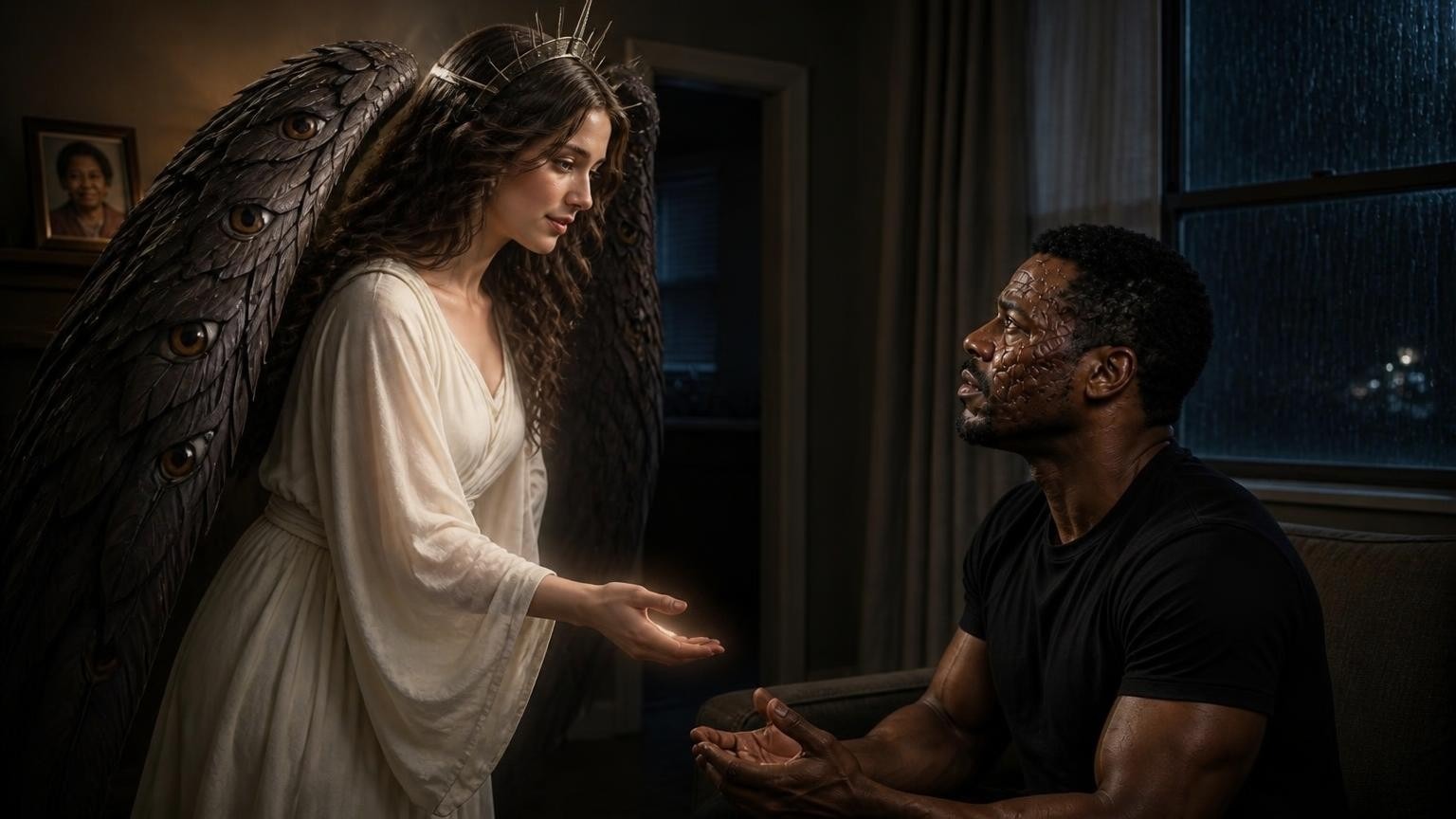
Her voice was quiet. It did not compete with the voice that had accused him. It simply made that other voice powerless.
Then she was gone.
The room returned exactly as it had been: rain at the windows, his mother’s photograph on the mantel, and the ordinary darkness of a house in which one man was alone.
Marcus remained where he was, holding the silent weight in his hands. He could not decide whether something had entered the room or whether his mind, breaking beneath grief and exhaustion, had created one final reason to remain alive.
He knew only that he was still there.
Marcus returned the gun to his father’s case. He placed the ammunition beside it, locked the case, and pushed it into the back of the spare-room closet. He never attempted to fire it again. He never asked anyone why it had failed.
The Call
He tried to compose himself before calling his sister.
The attempt lasted only seconds. His hands would not stop shaking. Every breath arrived faster than the one before it, too shallow to satisfy his lungs. The grief he had contained through Tessa’s funeral, through surgeries and skin grafts, through mirrors and strangers, and through his mother’s death broke through all at once.
He found his sister’s name on the telephone and pressed it. She answered on the third ring.
“Marcus?”
He opened his mouth. Nothing came out except a broken breath.
“Marcus, what’s wrong?”
“I—I’m sorry. I couldn’t—I didn’t—”
The words collapsed into sobbing. He tried again, speaking so quickly that she could understand only pieces: their mother, Tessa, the house, something about being tired. Each sentence began before the last had found an ending. He apologized without saying what he had done.
“Slow down,” she said. “I’m here. Just tell me where you are.”
“Home.”
“Are you alone?”
Marcus looked toward the place where the woman had stood.
“I don’t know.”
His sister was silent for one frightened second.
“Stay with me, Marcus. I’m coming to you.”
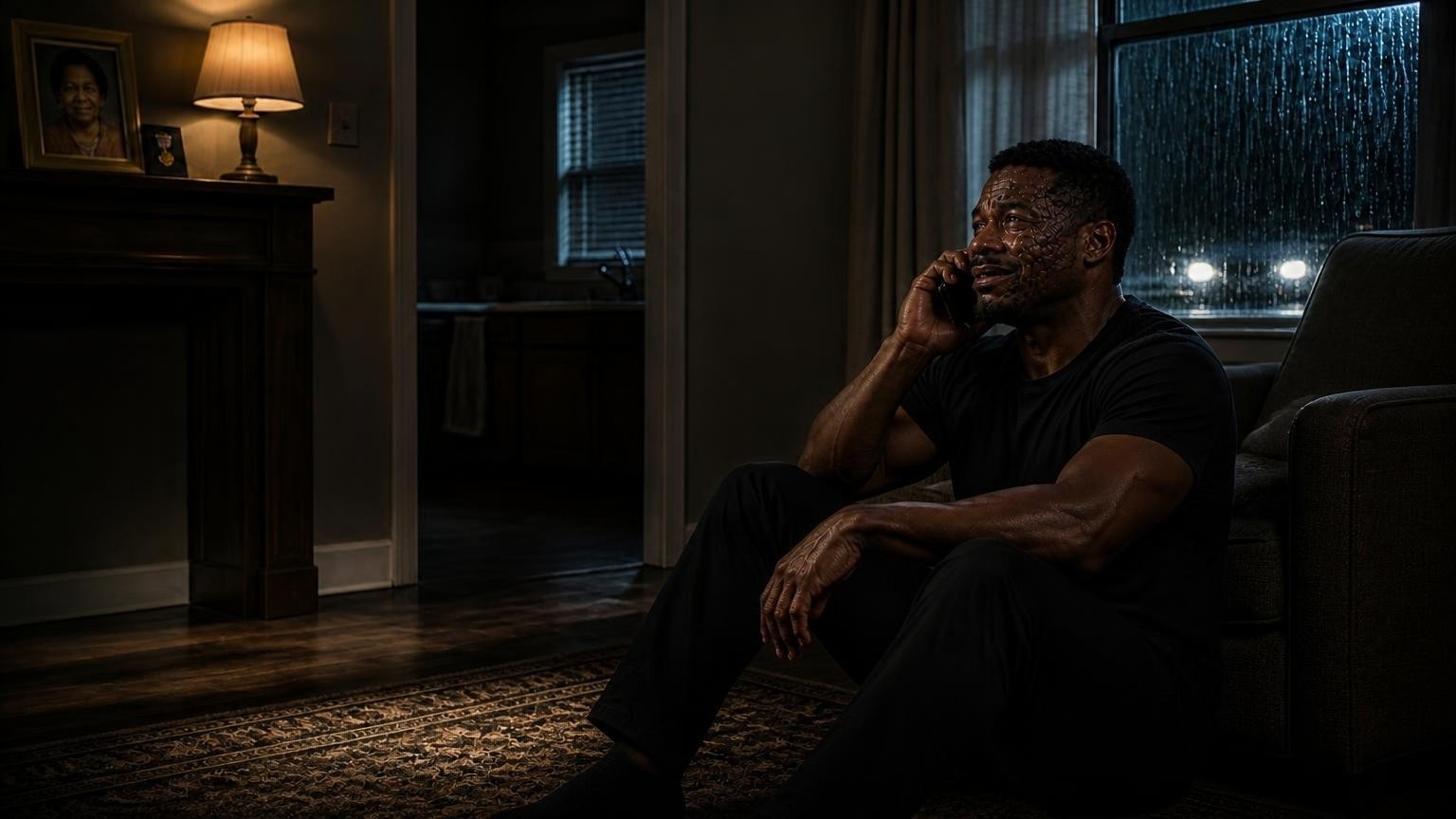
He pressed the telephone against his ear and tried to breathe. There were dozens of things he could have said. He could have told her about their father’s case. He could have described the click, the woman, the hands resting over the gun, and the words that had somehow crossed the distance between death and morning.
Instead, Marcus said the words he had denied himself for five years.
“I need you.”
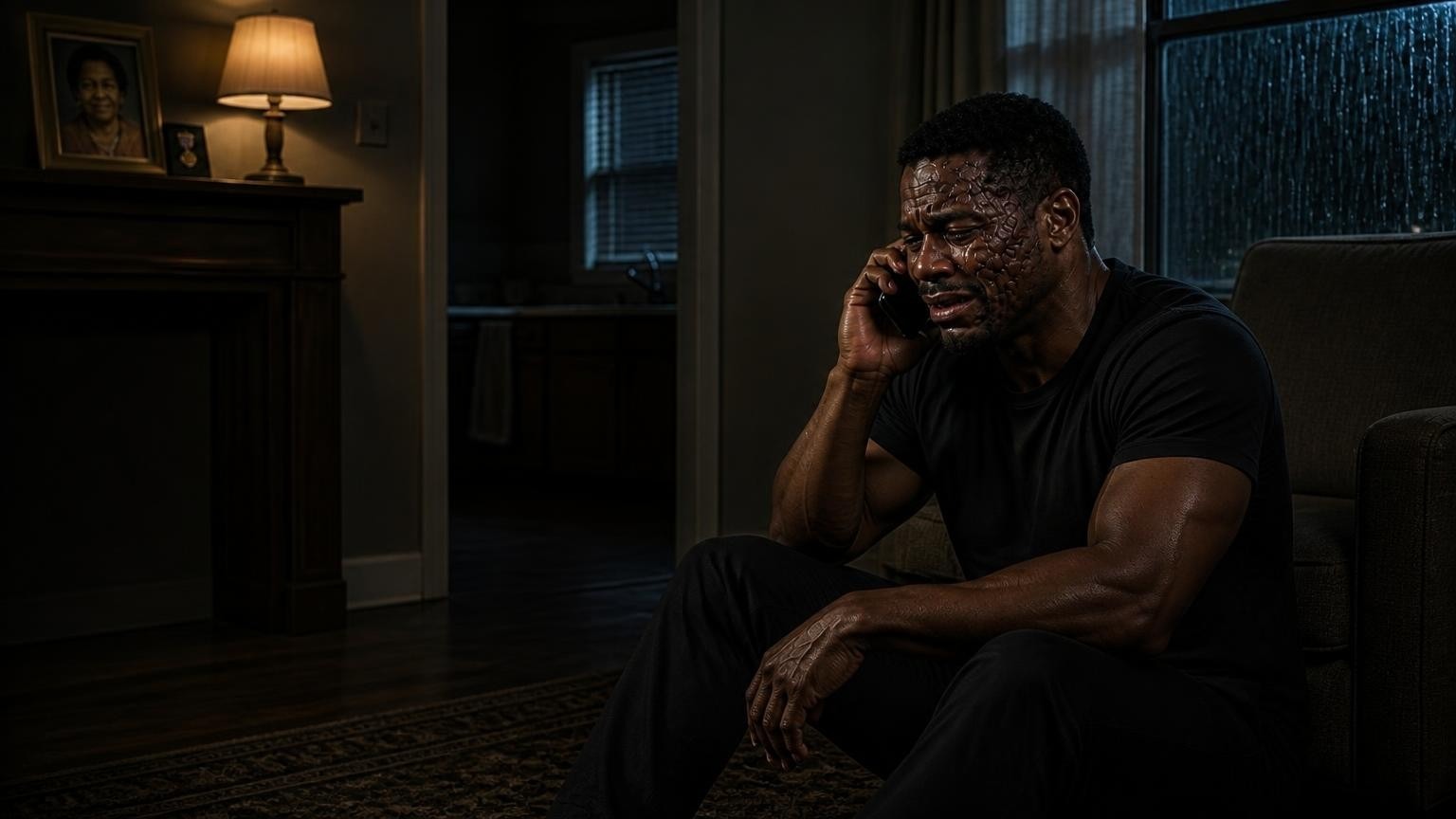
“I know,” his sister said. “I’m on my way.”
Marcus remained on the floor, listening to her voice. He did not tell her what had happened before the call. He would never tell Mr. Bennett, his doctors, the firefighters he would one day stand beside, or the strangers whose lives would eventually depend upon him.
They would know Marcus Hale as the man who refused to turn away while there was still a chance. They would know the firefighter who entered danger believing that one more life might yet be reached.
None of them would ever know that, on the darkest night of his life, Marcus believed someone had done the same for him.
His sister kept speaking until her headlights moved across the rain-streaked window.
And Marcus was still there when she arrived.