
The response from Aegis arrived at eleven forty-six.
Adrian opened the attachment before reading the message that accompanied it.
Conditional approval. Limited technical access. Activities confined to the civilian coordination proposal described in his application. Any additional personnel would require separate authorization. Materials could not be passed on merely because he had hired someone qualified to understand them.
He read that provision twice.
His attorney had marked three sections for discussion. None prevented the initial visits from going ahead.
Adrian called his assistant.
“Confirm the first available technical appointment.”
“After tomorrow?”
“Yes. Keep tomorrow clear.”
“It already is.”
“And ask counsel what I can show Sloane.”
“The authorization?”
“That, and anything they send before we go.”
He ended the call and opened the outline on his laptop. Beside Aegis, he replaced Access subject to review with Limited approval received.
The pharmaceutical agreement was already in the folder. It provided a paid allocation of computing time, subject to technical review, with a specialist assigned to the pilot. The company supplied medication to the Center; Adrian had known its commercial director for years. That relationship had obtained the introduction. The research division had required a separate proposal and payment.
He had paid.
He moved to the box at the top of his diagram.
Rowan.
Below it: No contact.
Adrian checked his messages, although the phone had been beside him all morning.
Then he printed the revised outline.
The printer produced thirty-eight pages before he noticed that he had included the research appendices. He stood over the output tray, separating the pages, then decided to keep them. Sloane could tell him which ones mattered.
One article led to another. References beneath a paper led to an older paper. He had begun saving documents because he understood their relevance, then because he thought someone else might. By the end of the first week, he had stopped closing the browser tabs. There were folders for architecture, recovery, coordination, quantum computing, and material he had not yet worked out how to classify.
He remembered where most of it had come from.
That did not mean he could explain it.
At six, his assistant came in wearing her coat.
“Do you need anything before I go?”
“No.”
She looked at the papers covering the small meeting table.
“Those are for tomorrow?”
“Some of them.”
“Your dinner’s in the refrigerator.”
He glanced toward her.
“You asked me to order it.”
“Yes. Thank you.”
After she left, Adrian searched the final document for a term he had underlined the night before. He found it in a paragraph referring him to another source.
He opened the reference.
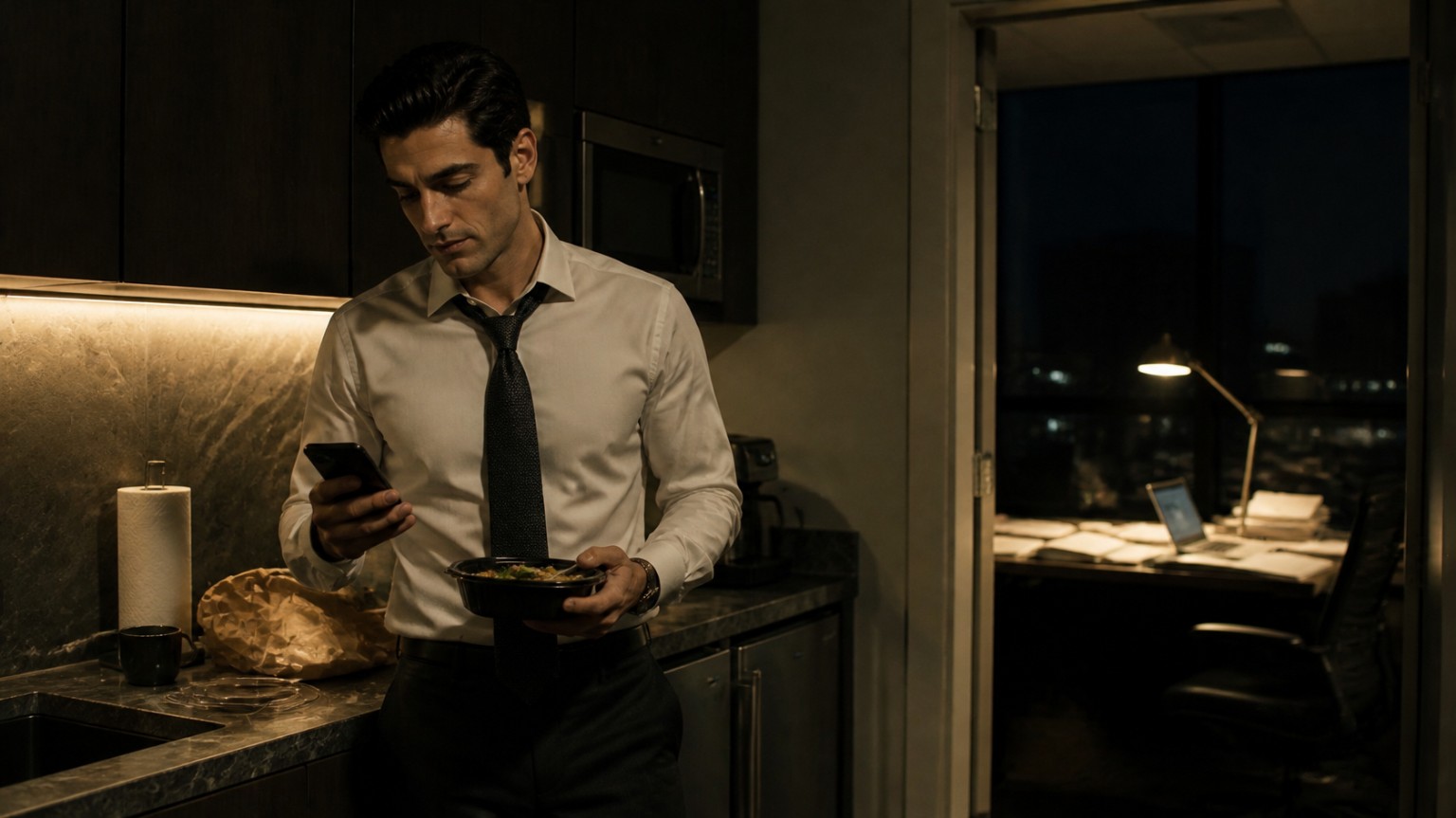
When he finally ate, he stood at the kitchen counter with the document on his phone.
At nine forty the next morning, two glasses stood beside an unopened bottle of water in the upstairs office.
Adrian had chosen the smaller office at the Center. His own desk was too large for a consultation, and the boardroom made everything feel like a presentation. The relevant agreements were in a thin folder. His research occupied a second, considerably thicker one.
He checked that the diagram was facing the visitor’s chair.
At nine fifty-eight, reception called.
“Ms. Sloane is here.”
“Send her up.”
A short pause.
“She’s asked if you could come down.”
Adrian looked at the glasses.
“Did she say why?”
“She’d prefer to meet you here first.”
“I’ll be down.”
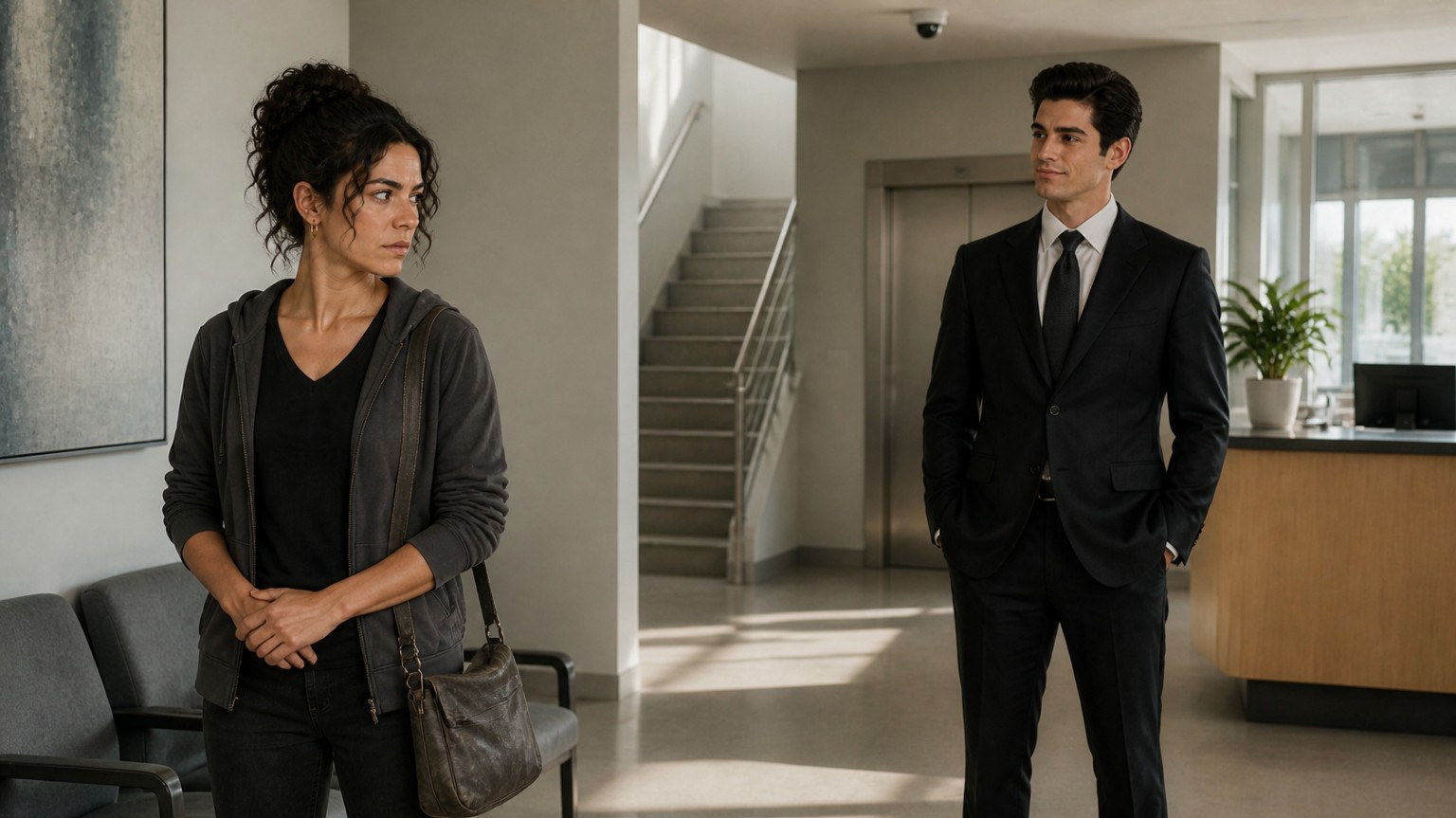
Sloane stood beside the reception seating rather than in it, a worn shoulder bag resting against her hip. Her jacket was still on. She watched him approach.
“Ms. Sloane. Adrian Vale.”
They shook hands.
“Thank you for coming. I’ve arranged a room upstairs.”
“Is it recorded?”
“The meeting?”
“The room.”
He smiled, allowing for the question.
“There are security cameras in the common areas. The office camera can be switched off. Of course we can have it off.”
“Who has access to the recordings?”
“Our security provider and designated staff.”
“Audio?”
“I would have to confirm the installation.”
She did not move toward the stairs.
Behind the reception desk, a staff member was trying to locate a referral that should have arrived the previous afternoon. Adrian heard her spell a surname, then ask the caller to hold.
“Would you excuse me for a moment?”
Sloane stepped aside.
He approached the desk and lowered his voice.
“Is that the transport office?”
“No. The clinic. They say they sent it.”
“Ask whether they can resend it while they’re on the phone. Use the secure address. If they need the manager, she’s in the intake room.”
The staff member nodded and returned to the call.
Adrian turned back.
“That is one of the problems I hoped we could discuss.”
Sloane glanced toward the desk. “I read your outline.”
“It happens every day. People come here ready to accept help, and we spend their patience trying to find paperwork.”
“Can we talk somewhere else?”
He took a moment to answer.
“There’s a coffee shop across the street. Would that suit you?”
“I saw it on the way in.”
“Let me get the folders.”
She waited downstairs.
Upstairs, Adrian put both folders into his case. He left the water where it was.
Sloane chose a table near the front window, away from the queue and the speaker mounted above the counter.
Adrian ordered coffee. She asked for tea, paid for her own, and sat with her bag between her chair and the wall.
Through the window, he could see the Center’s entrance. A woman in a blue coat held the door for someone using a walker.
“Before we start,” Sloane said, “don’t open anything containing patient information.”
“There isn’t any.”
“Or restricted contractor material.”
“I brought the permission summary my attorney cleared for discussion. Nothing technical from Aegis.”
“All right.”
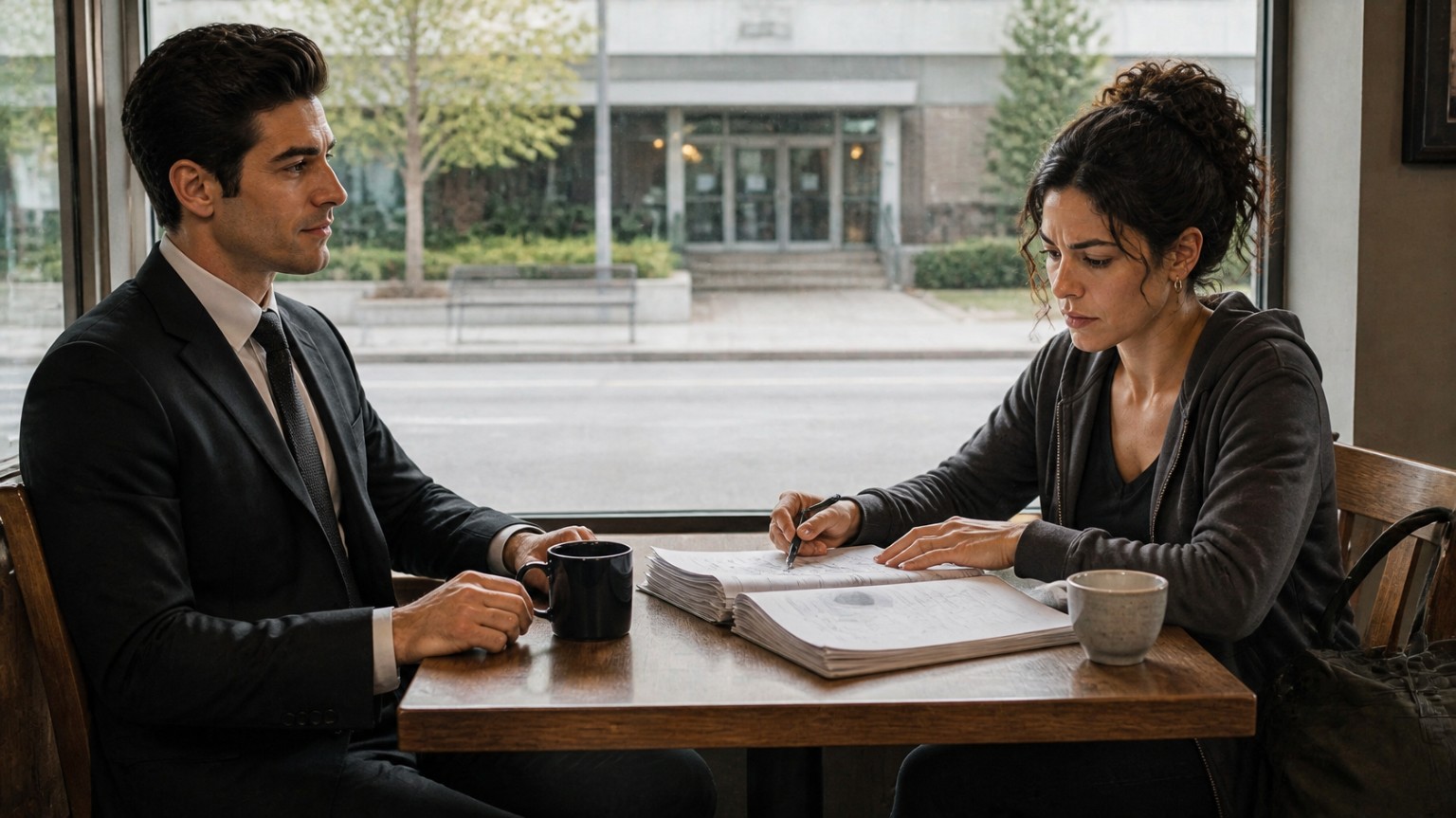
He set the thin folder between them.
“Aegis approved limited access yesterday. The pharmaceutical company has agreed to computing time and specialist support. Both arrangements are restricted to an initial assessment.”
She read the summaries.
“What have you promised the pharmaceutical company?”
“A funded pilot. They review the work before anything runs.”
“Have you chosen the work?”
“That’s why I’m here.”
She looked up at him, then returned to the agreement.
“Does their specialist know you want to combine it with a military system?”
“The proposal describes several possible components. Nothing has been submitted for execution.”
“I’ll need a technical conversation with them.”
“I can arrange it.”
“An introduction. Don’t promise them I’m taking the project.”
“An introduction,” he agreed.
He placed the larger folder on the table.
Sloane looked at its thickness.
“You’ve added to the outline.”
“I had two weeks.”
She opened it.
The first page was the diagram. Rowan at the top, the other systems beneath him, lines returning their results to the central box. Adrian had added examples in the margins. Staffing shortages. Transport changes. A canceled placement. Three organizations working from records that no longer agreed.
Sloane read the first two pages without speaking.
Then she turned back to the diagram.
“What makes you think Rowan can do this?”
“He coordinated information during the tunnel rescue.”
“So did the transit staff.”
“He supplied information they didn’t have.”
“Which establishes that he helped during that incident. It doesn’t establish that he can operate this.”
Adrian rested his hands beside his cup.
“I’m asking whether it can be built.”
“Your diagram assumes the answer to the hardest question.”
“Then tell me what you need to answer it.”
“Access to Rowan, his cooperation, and evidence of what he can actually do.”
“I’ve requested a conversation.”
“Has he responded?”
“No.”
“How did you contact him?”
“I left my details with Marcus Hale.”
“The firefighter.”
“Yes.”
“And he passed them on?”
“He said he would if the opportunity arose.”
Sloane sat back.
“So you don’t know whether Rowan has received a request.”
“I know I haven’t received an answer.”
“Those are different things.”
“I’m aware of that.”
His answer came more quickly than he intended.
She glanced at him, then lowered her eyes to the page.
Adrian took a drink. The coffee was still too hot.
“What about the other components?”
“What about them?”
“Can they work together?”
“Possibly. Possibly there’s no reason for them to. You’ve put quantum computing beside military AI and drawn arrows.”
He waited for her to continue.
“The pharmaceutical company owning a quantum computer doesn’t tell me whether your problem benefits from one. Aegis agreeing to a meeting doesn’t tell me whether its systems belong anywhere near treatment coordination. I need to know what each component receives, what it produces, and why the next component should trust the result.”
“That’s the work I’m offering to pay for.”
“Yes. But you keep asking about the finished system.”
“Because I want to know whether that is where the work can lead.”
“I can tell you whether the first step is worth taking. If you need somebody to promise the rest now, I’m not the person.”
A customer passed close to their table carrying two cups. Adrian drew the folder away from the edge.
“I don’t need a promise,” he said.
Sloane left the diagram open.
“Then we can stop treating every box as something we’ve already decided to use.”
She worked through his research with a pen he had offered and she had declined. Her own was clipped inside the folder she carried.
Beside one article she wrote: Different task.
Another received: Source?
“That came from a discussion beneath an interview,” Adrian said.
“Then I need the interview.”
“It’s behind it.”
She found the transcript and read the highlighted passage.
“This doesn’t support what the commenter said.”
“I suspected that.”
He had not. He remembered the comment distinctly.
She moved it into a separate pile.
When she reached a paper on recovery, he leaned forward.
“That discusses a system remaining available when one part fails.”
“In a particular architecture.”
“Could it explain how Rowan appears in different places?”
“Appearing through different devices doesn’t mean the whole system runs on each device.”
“Could it?”
“I don’t know what Rowan runs on.”
She said it plainly, without the embarrassment he had encountered in people who tried to answer before admitting they had no answer.
He watched her read.
Most people had stopped looking carefully after the first few pages. They found a phrase they recognized and began describing something they could sell him.
Sloane kept separating his material.
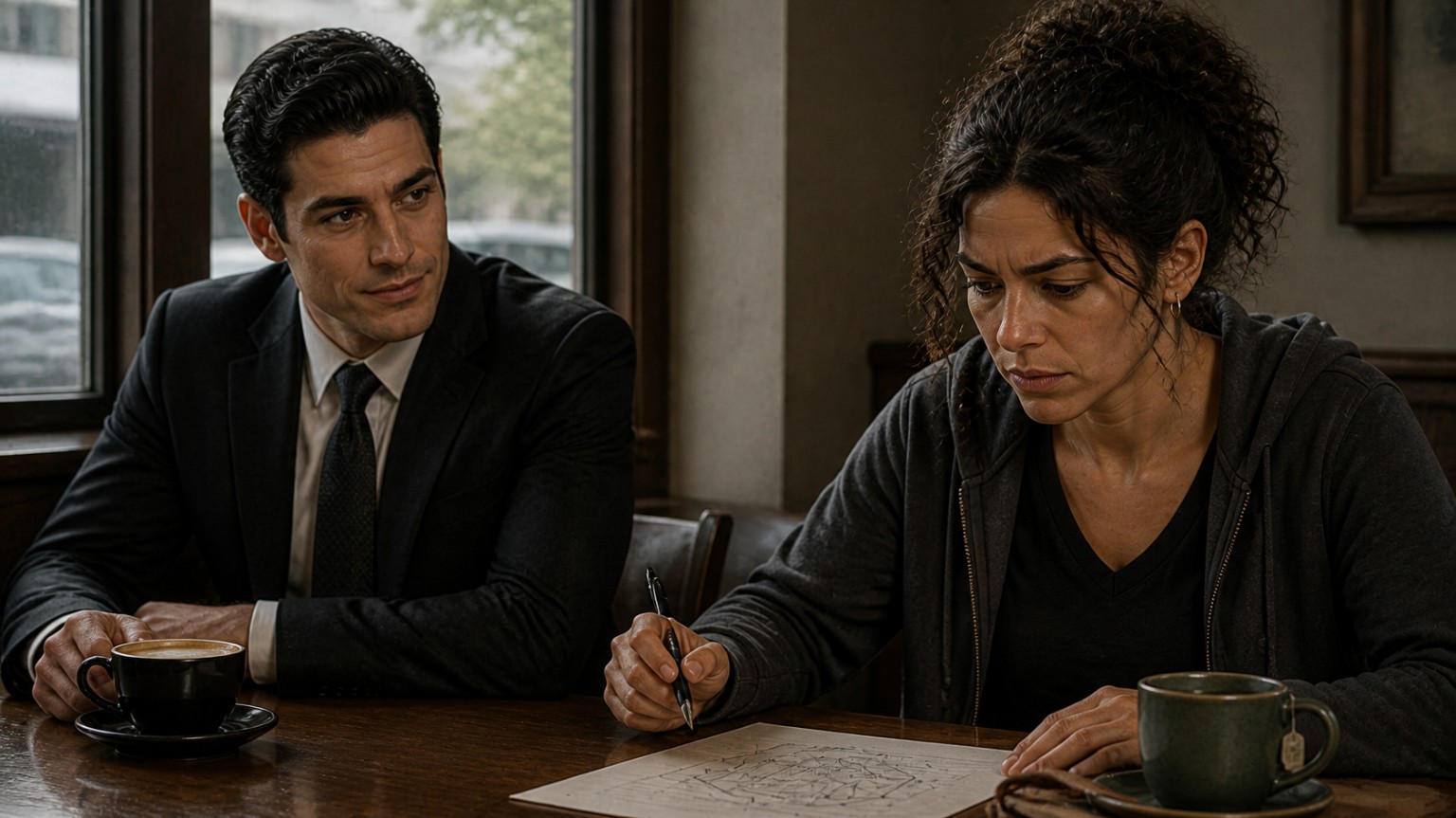
At the next diagram, she stopped.
Adrian noticed her pen first. Until then, it had moved almost as soon as she finished reading. Now it remained above the paper.
The diagram showed an isolated evaluation environment. A narrow path joined the monitoring layer to the recovery process, routed outside the boundary Adrian had assumed contained everything.
Sloane turned the page toward the window.
“Where did you get this?”
“An old Horizon paper.”
“Which one?”
He reached for the bottom corner. She let him turn it far enough to show the citation.
“It was linked from a university repository. The main link was dead. The archived copy worked.”
She read the date.
He remembered that search. It had been after midnight. He had nearly discarded the paper because it predated several of the others.
“Is it useful?”
“Why did you include it?”
“The recovery section. And this.”
He pointed to a note he had made beside the boundary.
If the outside connection fails, who can open it?
Sloane read his handwriting.
“That isn’t what this path does.”
“What does it do?”
“It separates monitoring from a particular recovery operation.”
“You recognized it.”
“I’ve worked with isolation environments.”
“At Horizon?”
She looked directly at him.
“The company is on the paper, Mr. Vale.”
“Yes.”
He withdrew his hand.
She knew the arrangement before reading the citation. He was almost certain of it. That told him nothing about what she knew, but he remembered the pause.
Across from him, Sloane examined the diagram again.
The published version was older. There were differences in the labels and two connections had been simplified. She had revised that arrangement later, inside the restricted division. The monitoring path had been one of her arguments for keeping observation available during a failed recovery.
The team had accepted it.
Her name did not appear on this copy.
She checked the following page, looking for an appendix. Adrian had printed the entire paper.
There were no deletion routines in it. Nothing that disclosed the work done afterward.
She set down her pen.
“Do you have the original file?”
“Yes.”
“Keep it with the source address and the date you downloaded it.”
“I’ve kept all of them.”
“Good.”
He waited.
She returned the paper to his folder, but did not put it in the rejected pile.
The table had become too small for the papers.
Sloane gathered them before the server returned for the empty cups. Adrian offered another drink. She checked the time and declined.
“I can offer an initial assessment,” she said.
“What would that involve?”
“You send me the source files. Public material only. I review what you’ve assembled, identify what can be tested, and write down what’s missing.”
“And a design?”
“A preliminary architecture if the assessment supports one. Not this whole system.”
“What can you build while I’m dealing with Aegis?”
“A small coordination demonstration. Ordinary computing. Invented records. Enough to show where requests stall and how conflicting updates get handled.”
“Without Rowan.”
“Yes.”
He looked down at the boxed name.
“That won’t tell us whether he can coordinate the other systems.”
“No. It will give us something to compare his performance against if he ever participates. It may also tell you that part of your problem can be solved without him.”
Adrian closed the thin folder.
“And the quantum allocation?”
“I speak with their specialist. We identify a candidate task, if there is one. We compare it with an ordinary approach before spending your allocation.”
“How soon can you begin?”
“When we agree on the scope and I have the material.”
“I can send it this afternoon.”
“I’ll send you terms first. The assessment is a separate engagement. Anything further needs another agreement.”
He nodded.
“No patient records,” she continued. “No credentials. No forwarding Aegis information because you think I might find it useful. If they want me involved, they authorize it.”
“My attorney made that distinction.”
“Then we should have no difficulty.”
“Would you try to contact Rowan?”
“I haven’t offered that.”
“If your assessment suggests he is necessary?”
“Then we discuss what we can do with his cooperation. We don’t write it into a contract as though you’ve already obtained it.”
He studied her for a moment.
“All right.”
She placed her pen in its clip.
“Payment buys the assessment, Mr. Vale. It doesn’t buy a favorable answer.”
“I’d be wasting both our time if that were what I wanted.”
Sloane fastened her folder without responding.
They agreed on a short call once she had reviewed the files. The pharmaceutical introduction could follow. Adrian would attend the authorized Aegis meetings himself and bring back only what he was permitted to share.
For the first time that morning, there was work he could assign without waiting for someone to explain what the assignment should be.
He stood when she did.
“Thank you, Ms. Sloane.”
“Mira.”
“Adrian.”
She adjusted the strap on her bag.
“Send the Horizon paper as a separate file. With the repository link.”
“I will.”
Outside, she stopped at the curb to let a bicycle pass. Adrian watched her turn along the pavement, away from the Center.
Then he returned upstairs.
The glasses were where he had left them. He put the larger folder on the table and opened it to the diagram she had recognized.
He could not have explained the recovery path any better than he could the night before.
He checked that the citation was still legible, scanned the page, and placed it first in the files he would send her.
His phone lit beside the water bottle.
Aegis had offered him an appointment.
This time, he answered the message before checking for anything else.
This story, its characters, organizations and events are fictional.