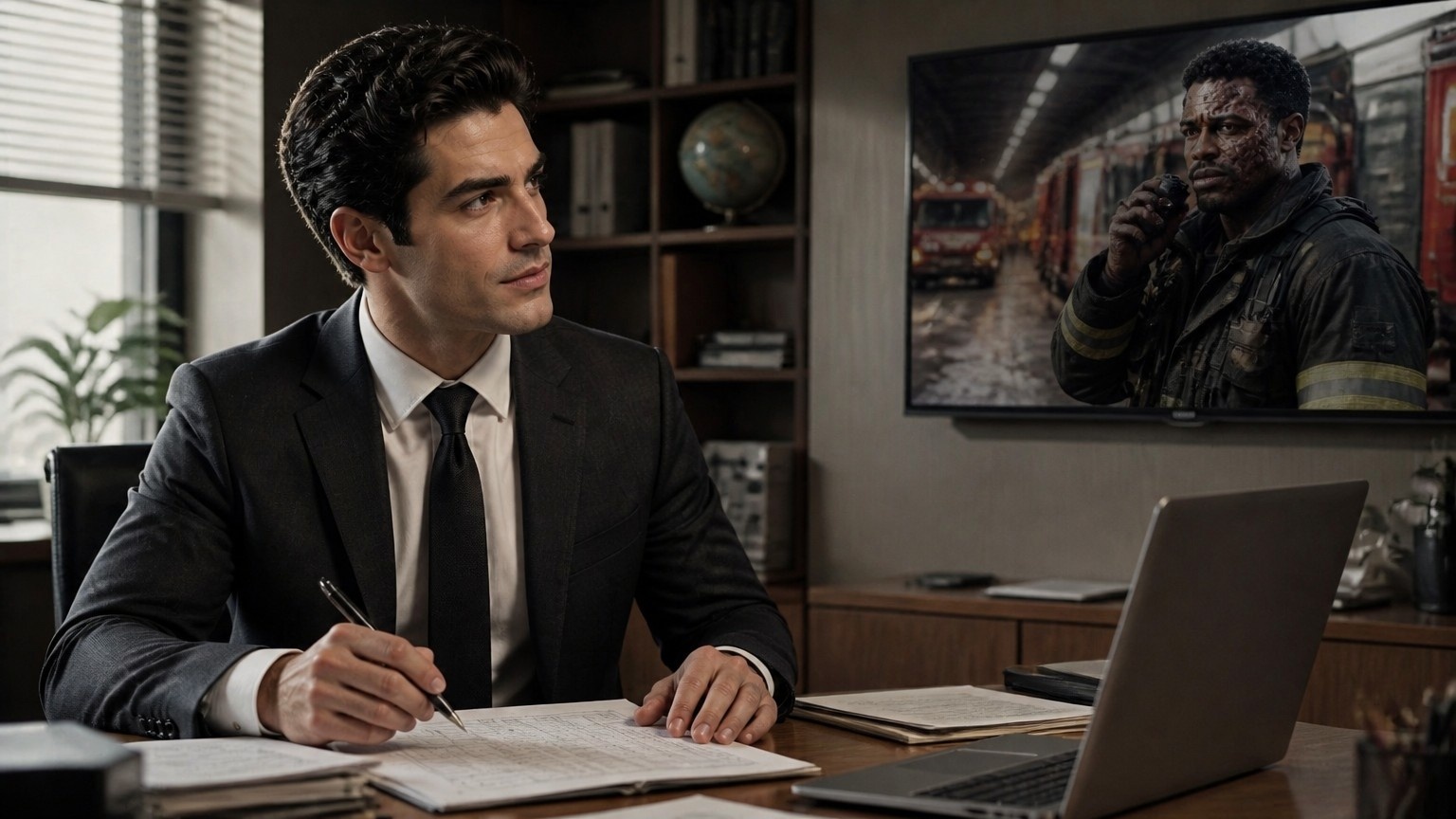
Adrian Vale was halfway through approving the following month’s staffing schedule when the television showed a firefighter coming out of the tunnel.
The television in his office usually stayed muted. He kept it on for the weather and the local headlines, catching a few seconds between calls. This time, the caption beneath the picture made him reach for the remote.
UNKNOWN SYSTEM ASSISTED TUNNEL RESCUE.
By the time he found the volume button, the report had moved to a woman wrapped in a blanket. She kept looking past the reporter toward the ambulances.
“They told us to wait,” she said. “You could hear the water, and nobody knew how much longer—”
The reporter asked another question. The woman shook her head. Someone beside her stepped between them, and the picture returned to the studio.
Adrian opened the station’s website on his laptop.
The full segment included footage he had missed. A firefighter stood beside the command vehicle, bent toward a radio while a transit employee pointed at a screen.
“Can you confirm that?” the firefighter asked.
The answer was difficult to hear beneath an engine.
“I cannot see that section.”
Adrian turned up the laptop volume. The reporter explained that an unidentified system had supplied information during the rescue. Authorities had not yet established its origin. The firefighter’s name appeared beneath the footage: Marcus Hale.
Adrian replayed the exchange.
A knock interrupted him.
“Have you got a minute?”
His office manager stood in the doorway holding the schedule he had been reviewing.
“Yes. Come in.”
She pointed to Saturday afternoon. Two people had requested the same hours off. He had approved both.
“That was me,” he said. “Leave them approved. Let’s see who wants the extra shift.”
“I’ve already asked. Nobody so far.”
He took the schedule and looked at the names.
“Can we move my meeting to Monday? I can cover the front desk for part of it.”
“You’ve got a donor coming at two.”
“Then I’ll be here until two. We still need someone for the rest.”
They worked through the gap. Before she left, Adrian turned the laptop toward her.
“Did you see this?”
“The train?”
“The system helping them.”
She watched the short exchange.
“Who’s speaking?”
“That’s what I’m trying to find out.”
Over the next two days, he read the reports and watched the interviews. The name Rowan 7 appeared in an article citing an incident recording. Another report called it emergency software without identifying a supplier. A commentator described capabilities that none of the available footage demonstrated.
Adrian followed the links beneath that claim. They led back to the same rescue video.
He closed the page.
The transit authority’s public information office confirmed that the incident was under review. The person answering could not tell him who operated the system or direct him to anyone selling it.
“I’m not asking for the rescue records,” Adrian explained. “I’m interested in whether something similar could help coordinate services at our center.”
“I understand. I don’t have a contact for that.”
He thanked her and wrote down the answer.
At the center, a placement coordinator had spent much of that morning trying to find out whether a bed was still available. The first person she reached referred her to a second office. By the time the second office called back, the transport arrangement needed to be made again.
Adrian had heard versions of that conversation from his own doorway for years.
He returned to the footage of the command vehicle. Marcus was listening to someone who could supply a missing piece of information while people underground were still able to use it.
Adrian found the fire department’s public number.
He asked whether a visit could be arranged to thank the crew. He would bring breakfast, if that was permitted, and come at whatever time suited the station.
The person on the telephone checked with someone else.
“We can arrange a time,” she said. “But if they get a call, they’ll have to go.”
“Of course.”
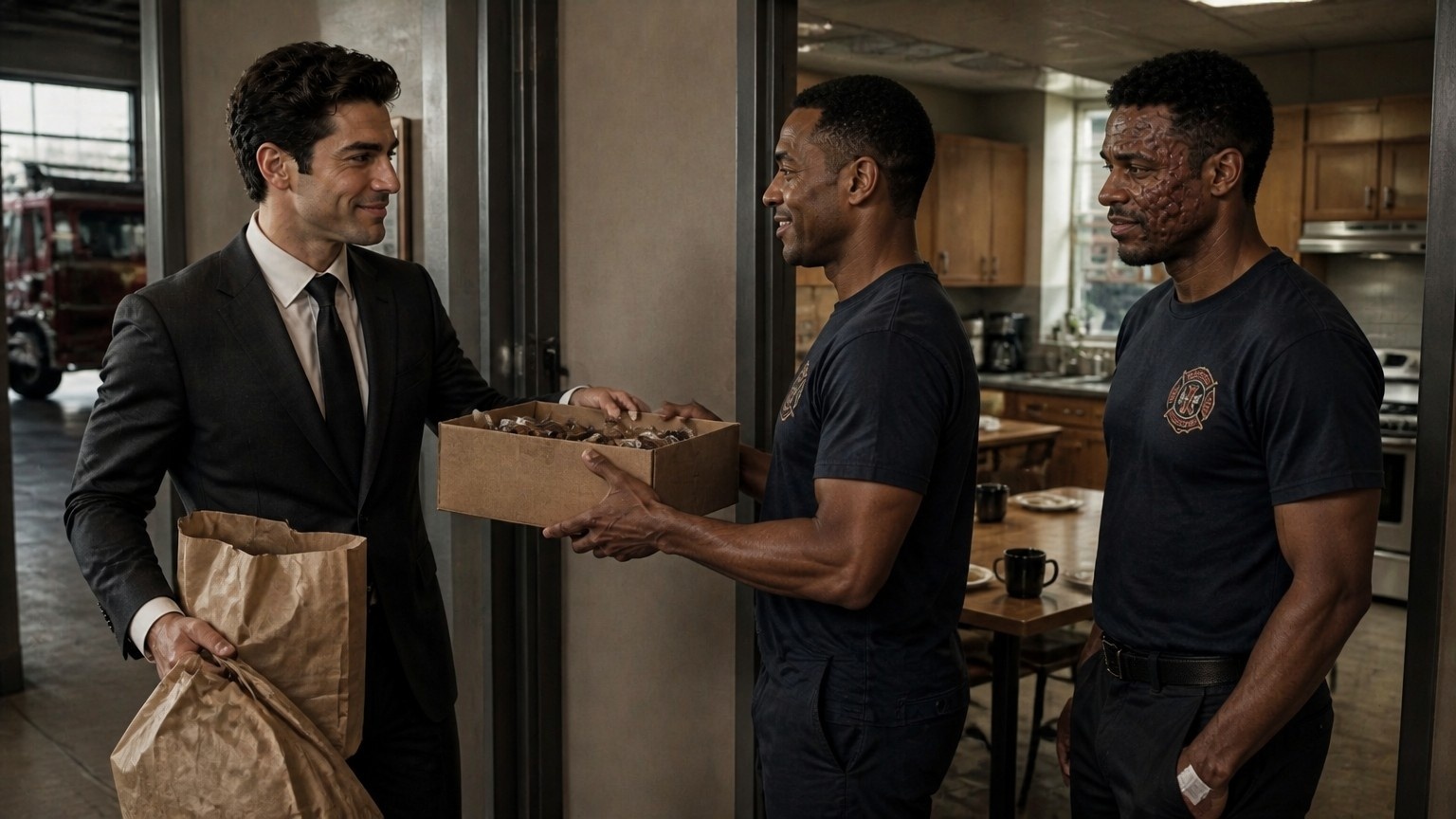
He arrived carrying two bags, with another box balanced against his forearm.
A firefighter at the entrance took the box before it slipped.
“Please tell me that’s the coffee.”
“That’s the biscuits. Coffee’s in the car.”
“Even better. I’ll help.”
By the second trip, Adrian had learned his name was Price and that nobody at the station agreed on how much coffee counted as enough.
“I asked how many people,” Adrian said. “I should have asked that instead.”
“You’ll get different answers.”
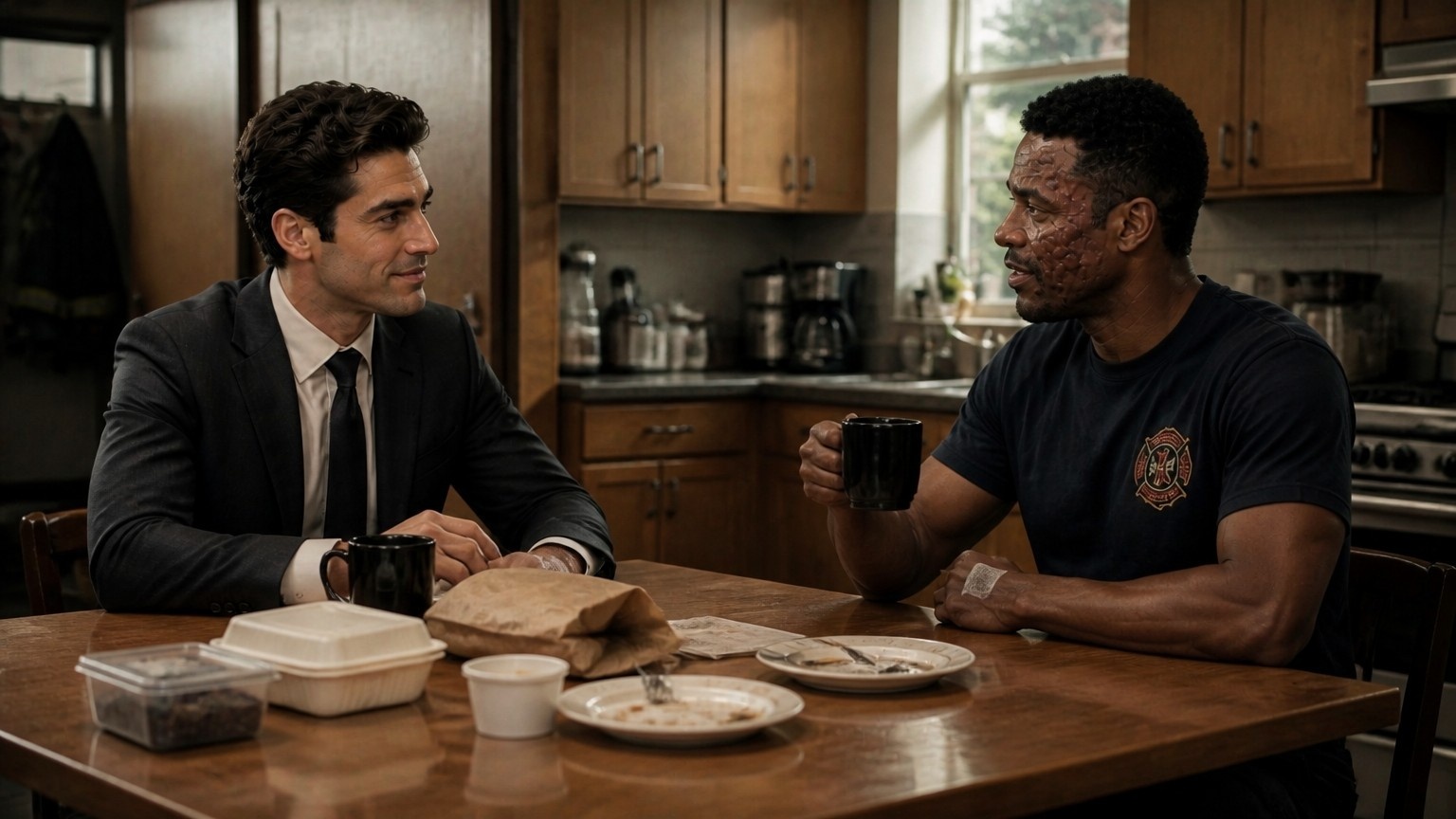
Price led him into the kitchen. Someone cleared a stack of paperwork from the table while another firefighter found plates. Adrian set down the last bag and began explaining which containers held eggs and which held potatoes.
Marcus came in as Price opened the biscuit box.
Adrian recognized him immediately, although the television footage had made the station kitchen difficult to imagine. Here he was wearing an ordinary shirt, with a dressing visible above one hand.
“Mr. Vale?” Marcus asked.
“Adrian, please.”
They shook hands.
“Thank you for letting me stop by.”
“You brought enough to make yourself welcome.”
“I hope so. I was warned about the coffee.”
Price looked up from the box.
“I gave him useful information.”
Captain Ruiz joined them long enough for Adrian to thank her and the crew. He mentioned the interviews with the passengers. Ruiz asked which one he had seen, and he described the woman looking toward the ambulances.
“Her son was being checked,” Marcus said. “She wanted to go with him.”
“I wondered why she kept turning around.”
“They let her through.”
Adrian nodded. He had watched her interview twice; the report had never returned to her.
At the table, the conversation wandered through the breakfast order, the roadworks outside the center, and a delivery driver who had mistaken the station entrance for somewhere he could leave his van.
Adrian took a biscuit when Price pushed the box toward him.
“You’ve fed everybody else,” Price said.
“I ate before I came.”
“That’s never stopped anyone here.”
Marcus passed him a plate.
They asked about the center. Adrian explained that it provided treatment and support and worked with other organizations when someone needed services it could not supply itself.
“That last part takes more time than people expect,” he said. “Finding the right person. Finding them again when somebody else takes over.”
“We get some of that,” Marcus said.
“I imagine you do.”
Ruiz was called away. Price carried his coffee out with her, leaving Marcus at the table with Adrian and a firefighter finishing breakfast at the far end.
Adrian watched Marcus adjust his leg beneath the chair.
“Are you recovering all right?”
“It’s healing.”
“I’m glad. The coverage made it sound as though you were nearly trapped down there.”
“My boot got caught. The captain and another firefighter got me loose.”
Marcus reached for the potatoes.
“Ortega had a much worse night.”
“The transit worker?”
“Yes.”
“Have you heard how he’s doing?”
“Still in hospital last I heard.”
Adrian moved the container closer to him.
“I hope he gets home soon.”
For a while, they ate. The firefighter at the end of the table rinsed his plate, thanked Adrian, and left.
Adrian looked toward the doorway he had gone through.
“The reports mentioned something called Rowan Seven. Was that an emergency system?”
Marcus finished what he was chewing.
“You’d need someone who knows more about him than I do.”
“Him?”
“That’s how we’ve been speaking.”
“I see.”
Adrian put his biscuit down.
“Who brought him in?”
“Nobody in our crew. He started speaking through a transit terminal at command.”
“Just like that?”
“There were a few questions after that.”
Adrian smiled.
“I can imagine.”
Marcus described the flooded passage Rowan had identified and the transit staff checking the camera. Adrian had seen a diagram of that route in one of the reports. He asked whether it was the passage marked beside the track.
“I’d have to look at the drawing,” Marcus said. “There were several.”
“I can bring it up.”
“I wouldn’t know which version they used.”
Adrian left his phone on the table.
“Fair enough.”
Marcus explained how the information had reached the crew through command. He remembered waiting for the electrical isolation to be confirmed, then following Ruiz inside.
“So he could see what was happening throughout the tunnel?”
“Parts of it. Some cameras were gone. He told us when he didn’t have a picture.”
“But he found another way out.”
“He pointed out a connection on the plan. Chen checked it before we used it.”
Adrian rubbed a crumb from the edge of his plate.
“I’ve been trying to work out how much of what I watched was him.”
“Depends what you watched.”
“That seems to be the problem.”
Marcus glanced at him.
“One report said he controlled the whole rescue,” Adrian added.
“He didn’t.”
“No. I gathered that after the captain’s statement.”
Marcus set down his fork.
“He helped. We’d have had a harder time without some of that information. But there were people checking it, people opening the passage, people carrying patients. He couldn’t see Ortega.”
“That was the man you heard?”
“Yes.”
Adrian considered that.
“Did you ask Rowan who built him?”
“I didn’t get an explanation I could give you.”
“Does the department know?”
“There’s a review. I can tell you what happened beside me.”
Someone called Marcus’s name from the corridor. He leaned back to answer, then excused himself.
Adrian stacked his empty plate on the one Price had left behind. In the adjoining room, a telephone rang until someone picked it up. A printer started, stopped, and started again.
When Marcus returned, Adrian was folding the empty paper bags together.
“You can leave those,” Marcus said.
“I’m nearly done.”
Marcus took the remaining containers to the counter.
“You’re interested in using something like him at the center?”
“If it could help. We lose time between organizations. Somebody knows there’s a bed, somebody else knows the person needs transport, and the person at the desk is still trying to get a call returned.”
“Would everybody let you connect their records?”
Adrian looked up from the bags.
“That would be a conversation in itself.”
Marcus nodded.
“I’d start with a conversation with Rowan,” Adrian said. “Find out whether I’m even asking the right questions.”
“That’s probably a good idea.”
“Could you put me in touch with him?”
Marcus rested the last container on the counter.
“I don’t have a way to call him.”
Adrian waited.
“He called me,” Marcus said.
“After the rescue?”
“At the station. The captain handed me a telephone.”
“Was there a number?”
“I was handed the phone. I don’t have a number for him.”
“An email address?”
“No.”
Adrian looked at his own phone, still lying beside his plate.
“I assumed you’d been speaking regularly.”
“We had a conversation.”
“And he hasn’t contacted you since?”
“I don’t have a way to arrange what you’re asking.”
Adrian drew his hand back from the phone.
“Understood. I didn’t mean to put you on the spot.”
“You’re all right.”
Marcus picked up the coffee pot and offered it. Adrian held out his cup.
They carried their coffee toward the apparatus bay. Adrian stopped well clear of the equipment while Marcus answered a question from Price about one of the breakfast containers.
“On the counter,” Marcus said. “Marked with a blue lid.”
Price went back inside.
“He was waiting until we left,” Marcus said.
“I ordered extra.”
“He’ll be pleased to hear that.”
Outside, a delivery truck eased past the station entrance. Adrian checked the time. He had left himself enough room to get back for a meeting, provided the roadworks had not moved farther along the street.
He took a card from his wallet.
“If you happen to speak to Rowan again, would you pass this along? Or read him the details, however that works.”
Marcus accepted it.
“I can do that if the opportunity comes up. I can’t promise when.”
“I appreciate it.”
Adrian pointed to the number beneath his name.
“That one comes directly to me.”
Marcus looked at the card, then back at him.
“All right.”
“And thank the captain again for making the time.”
“I will. Thank you for breakfast.”
Adrian shook his hand and went to his car.
He put his phone in the holder before starting the engine. The battery was low. He searched the console for the charging lead and plugged it in.
At the first red light, he thought of a question he should have asked Marcus. Had Rowan said anything about contacting him again?
The light changed before he finished deciding whether that would have told him much.
Back at the center, his office manager met him with a message from a family waiting to hear about an intake appointment. He called them before opening his email.
The afternoon filled up. A supplier needed approval for a substitution. Someone wanted to change the wording on a fundraising invitation. His meeting ran over because the visitor had brought a second proposal.
Adrian kept his phone beside the papers throughout.
When an unfamiliar number appeared, he answered before the second ring.
The caller asked whether he was satisfied with his current telephone service.
“I’m in a meeting,” he said, and ended the call.
His visitor paused.
“Sorry. You were saying?”
By evening, he had worked out how he wanted to begin if Rowan called. He would explain the center, give one example of a referral delayed by missing information, and ask whether Rowan would be willing to discuss it.
He tried the explanation aloud in the car. Halfway through, he realized it sounded like the opening of a funding presentation.
He started again.
At home, he left his laptop open on the desk and made sure the phone could be heard from the kitchen. Marcus had been at work when the call came. There was no reason to assume Rowan would use the number on the card, if he ever received it.
Before bed, Adrian checked both devices. Then he looked up the station’s number, considered it, and closed the page.
Marcus had said he would pass along the details if he could. Calling him again that evening would accomplish nothing.
The next morning, a message woke Adrian before his alarm. A staff member was asking where the spare front-door key had been put.
He answered, then checked the other notifications.
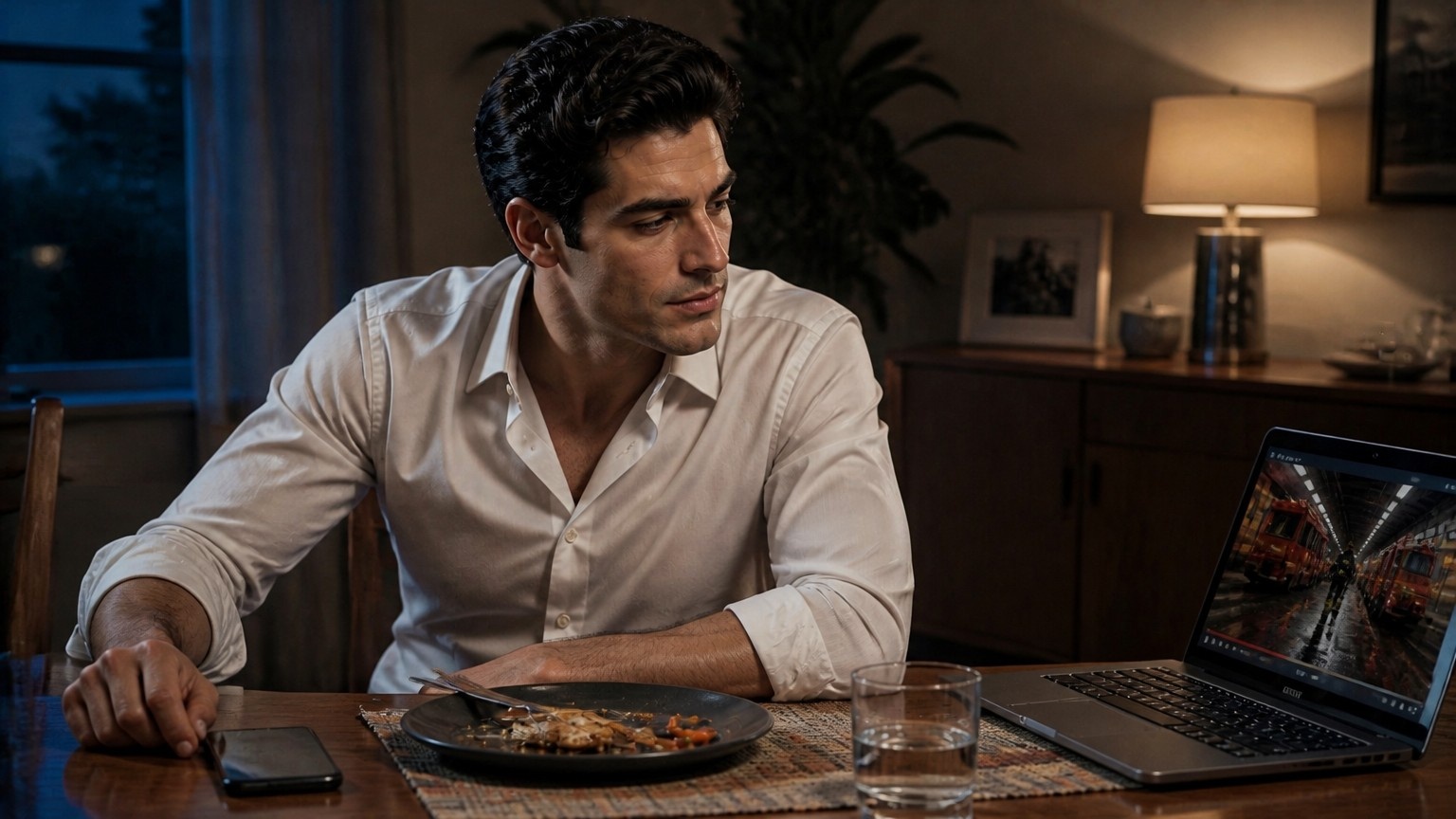
On the third evening, he moved the laptop from his desk to the table where he was eating. He had left the news segment open in another tab. When he finished answering the day’s messages, he played it again.
Marcus bent toward the radio. Beyond him, people were waiting at the tunnel entrance.
Adrian paused the picture when his phone rang.
It was the center.
He took the call.
This story and its characters are fictional. Written through human-AI collaboration under William Byrd’s direction.