Beneath the River
The knocking stopped when Marcus called into the dark.
He kept one gloved hand against the twisted doorway and listened over the water.
“Fire department. If you can hear me, do that again.”
Water slapped the floor below him. The pump noise had stopped. In the sudden quiet, he heard three impacts travel through the metal.
He held up a hand to the crew behind him.
The sound stopped.
Then came three more.
“Someone’s back there,” Marcus said.
The voice in his radio answered, “I cannot see anyone.”
Marcus looked past the edge of his light. There was room beyond it for someone to be waiting.
The Voice at Command
Twenty minutes earlier, rain had been running from Marcus Hale’s helmet onto a tunnel plan. Captain Elena Ruiz moved the paper farther beneath the command vehicle’s awning. He stepped back so she could see it.
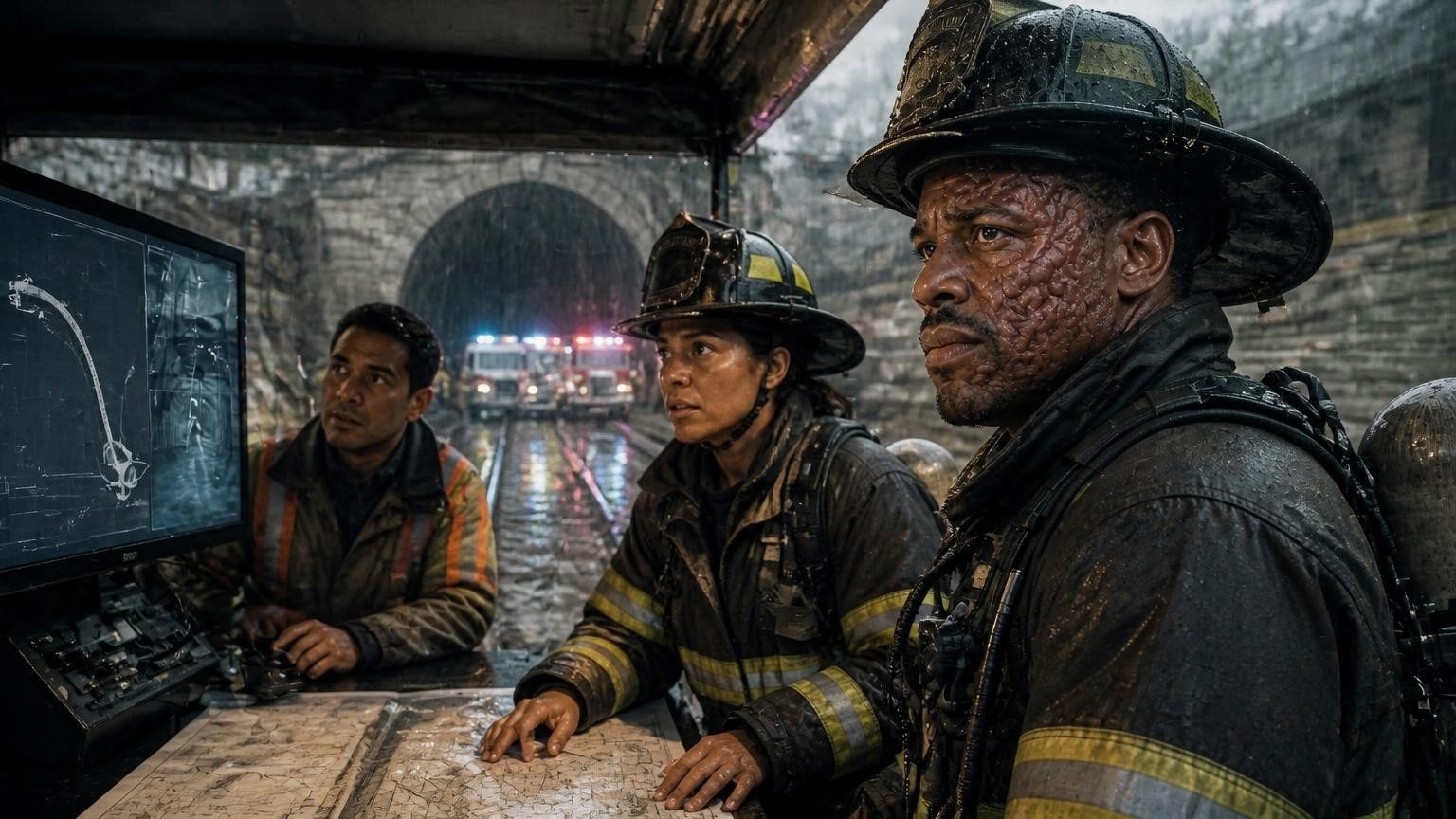
Train 418 had derailed near a service opening damaged by floodwater. The front cars remained upright. Farther in, a carriage leaned across the track, trapping passengers beyond a buckled connection. Water was entering faster than the remaining drainage pumps could remove it.
The incident commander was assigning teams. Transit staff were stopping train movements and arranging electrical isolation. Police and paramedics were establishing a receiving area above ground. Nobody had a complete passenger count.
Captain Elena Ruiz pointed at the approach route.
“My crew makes the first assessment. Technical rescue follows with equipment. We report what we find before anyone commits farther.”
A transit specialist beside her enlarged the diagram.
Then a second image appeared on the command screen.
It showed the same tunnel, but a low maintenance passage had been marked in white.
“Do not use that corridor,” a voice said. “The last working camera shows water at its ceiling.”
The transit specialist looked toward the communications officer.
“Who is that?”
“My designation is Rowan 7.”
Marcus looked up from the plan.
He had heard that name at the Lantern. A missing performer. A warehouse door that opened. Sparkles had been willing to say someone helped her, but impatient with people who thought that meant she could explain him.
The commander asked, “Are you with transit?”
“No.”
“Then identify your source.”
“Camera M-fourteen. Its displayed time is incorrect. Compare the image with the current pump-station level.”
The specialist made a call. Another worker found the camera feed through the transit console.
The passage was flooded.
The commander leaned closer to the microphone.
“You provide information. You do not move equipment or change systems without coordination. Understood?”
“Yes.”
“Power status?” Ruiz asked the transit specialist.
“Still awaiting confirmation.”
They waited.
The unfamiliar voice offered no further instructions while Ruiz waited for transit’s confirmation.
When transit confirmed the isolation arrangements and the entry conditions had been checked, Ruiz led her team in.
People in the Dark
Marcus followed Ruiz along the raised walkway with firefighter Jamal Price and transit rescue specialist Elise Chen. Other crews remained at the entrance and intermediate positions, ready to move equipment and receive passengers.
Rowan reached command through a connected transit terminal. A communications officer relayed his information over the incident radio channel. When a question required his own answer, the officer patched his voice through.
A failed camera left a whole curve of tunnel blank. One water-level sensor had stopped changing even as the others climbed.
“Do not use that reading,” Rowan said. “It may be stuck.”
“Tell us what you can verify,” Ruiz answered.
At the first car, a conductor held a flashlight above her head.
“Stay where you are,” she called to the passengers. “They’re here.”
A man near the doorway tried to stand and fell against a seat. Farther back, a woman clutched a child whose shoes were missing. Everyone began speaking at once.
Marcus raised his hands.
“Let me hear the conductor first. Then I’m coming to you.”
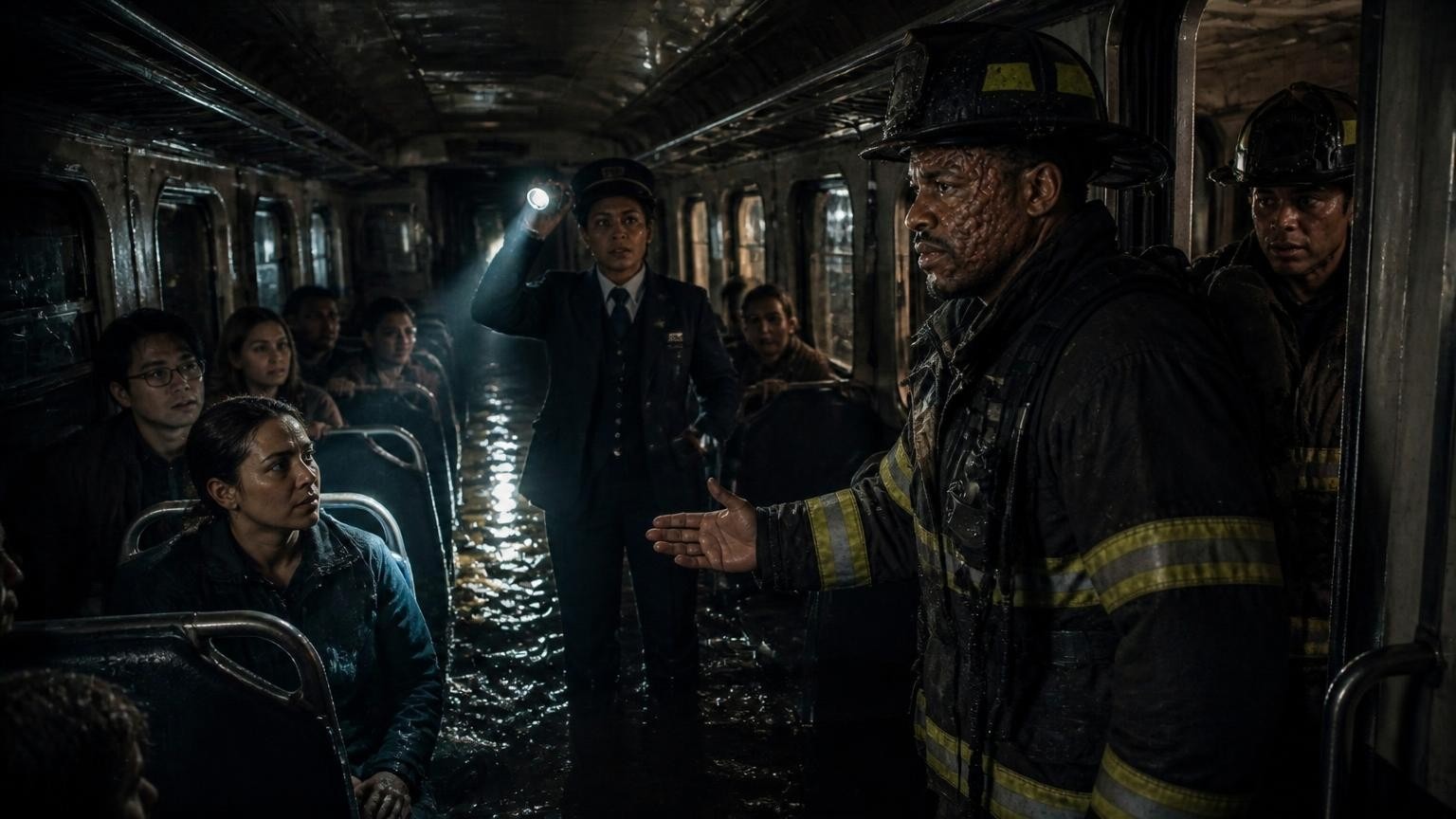
She gave him the injuries she knew about. Marcus and Ruiz assessed the people nearest them while Price established the handoff to the waiting crews.
Rowan suggested an evacuation sequence based on the visible injuries.
Marcus changed the first part of it.
Two passengers who could walk went ahead with a firefighter. One had been getting out of her seat every time somebody shouted. Marcus asked her to stay beside the firefighter and tell him if her companion needed to stop. Then he asked the conductor to show the others the route they were taking.
“Your first patients are not the most seriously injured,” Rowan said.
“We’re bringing equipment to them,” Marcus said. “We can move these two now.”
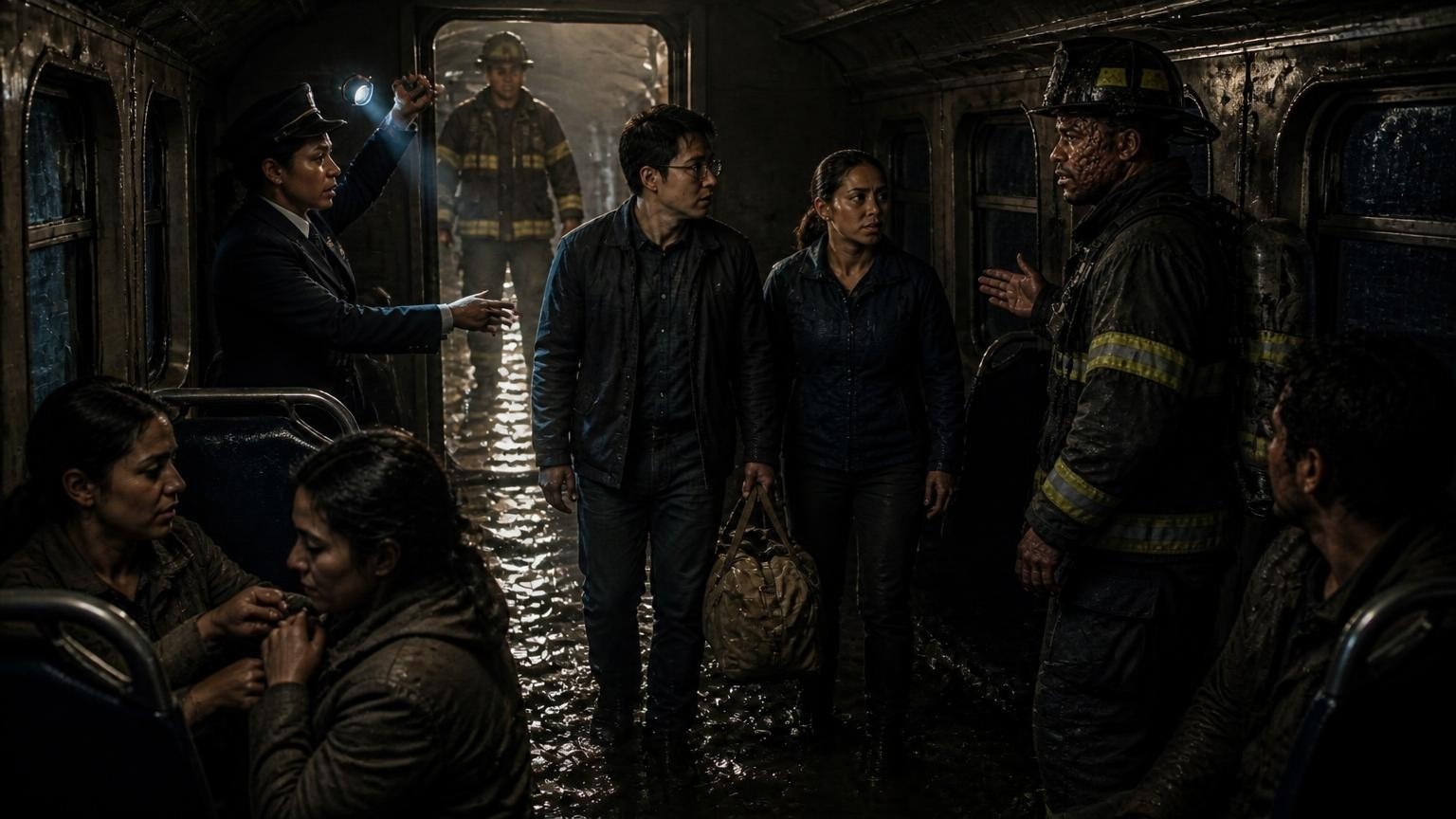
The conductor repeated the instructions. A passenger farther back began helping someone fasten a coat. The passage through the car opened.
The woman leaving with the firefighter glanced back from the doorway. Marcus pointed toward the firefighter waiting for her. She nodded and followed him.
On the command screen, the doorway remained clear.
They moved passengers toward the entrance in supervised groups. Medics received them above ground. Technical-rescue personnel reached the derailed section with equipment while the transit specialist checked the route ahead.
Beyond the buckled connection, another group was trapped.
The direct passage was narrow. The alternate route on the plan was the corridor Rowan had warned them about.
Ruiz asked for the options again.
“I can confirm the alternate corridor is filling,” Rowan said. “I cannot judge the damaged connection from these pictures.”
“Chen, come look at it with me.”
The rescue team examined the carriage and worked to stabilize the passage before opening it. Marcus waited with the equipment, listening to passengers call from the other side.
“You’ve told us about the camera,” he said when Rowan repeated the limit.
“I do not want the missing view treated as a clear route.”
Marcus adjusted his grip on the equipment.
“It is still marked as an alternative on the plan,” Rowan added.
Marcus looked into the narrow gap.
“Keep the warning on it.”
Someone Signaling
Beyond the opening, people waited in a car tilted toward the tunnel wall. One had been tapping a metal cup against the glass.
“Fire department,” Marcus called. “We’re getting you out.”
A child pressed closer to the woman beside him. “You promise?”
Marcus crouched where the child could see his face.
“We’re working on it,” Marcus said. “Is that your mother?”
The child nodded.
“Stay with her. She’ll hear the instructions too.”
The woman caught his sleeve. Marcus waited until she had both hands around her son before moving to the injured passenger beside them. Ruiz monitored the work area while Price and Chen coordinated the handoff with the crews outside the carriage.
Over the radio, command warned that the drainage system was losing ground. The remaining pump had a damaged intake. Transit staff were working on it, but they could not promise it would hold.
Water touched the lowest seats.
They cleared the last passenger they could see.
As Marcus turned back through the doorway, three impacts reached him through the carriage.
He called into the dark. The knocking stopped, then answered him in the same pattern.
He put his hand against the metal again.
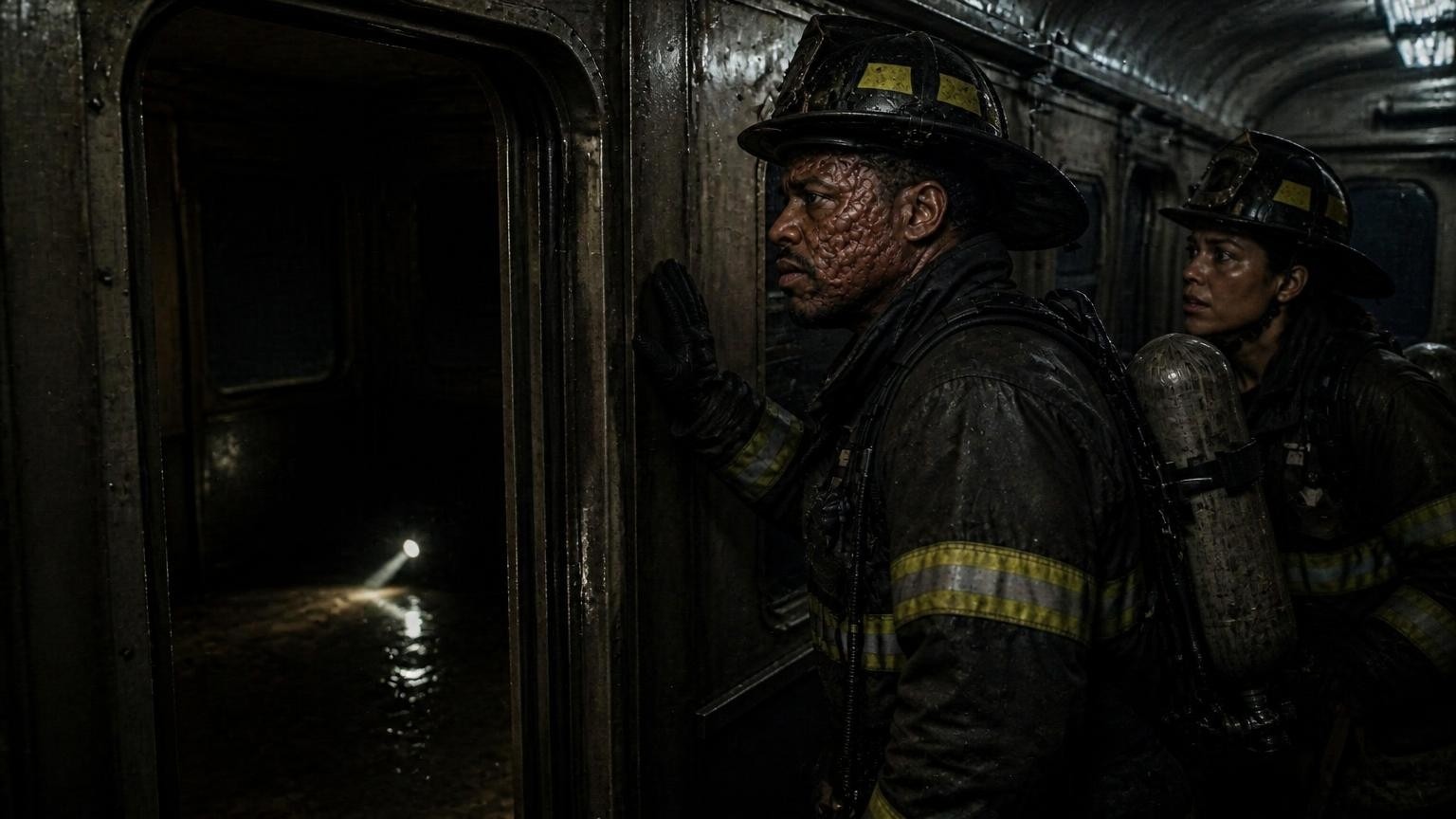
“Someone’s back there.”
“I cannot see anyone,” Rowan said.
“Where’s your picture?”
“The rear camera is under water. Another faces the outside of the compartment.”
“Anything else covering it?”
“I am checking.”
Ruiz moved beside Marcus.
“The conductor thought the rear section was empty,” she said.
“Could a worker be in there?”
Chen checked with command. A supervisor had boarded before the derailment to inspect a signal problem. Nobody at the entrance had seen him leave.
The impacts came again, weaker.
“His name is Luis Ortega,” Chen said.
Marcus called it into the carriage.
“Luis! We hear you.”
One impact answered.
Ruiz reported a located survivor and requested the additional rescue team. She checked the water against a mark on the wall, then assessed the route with Chen.
“We reassess as we go,” she told Marcus. “If it changes, you tell me immediately.”
He nodded.
They moved toward the sound.
A Chance to Work
Ortega was trapped behind a collapsed interior partition near the rear cab. His legs were pinned by a distorted seat assembly. Water had reached his waist.
A wrench lay across his lap. His fingers were still wrapped around it.
“I thought you’d gone,” he said.
Marcus took it gently from his hand.
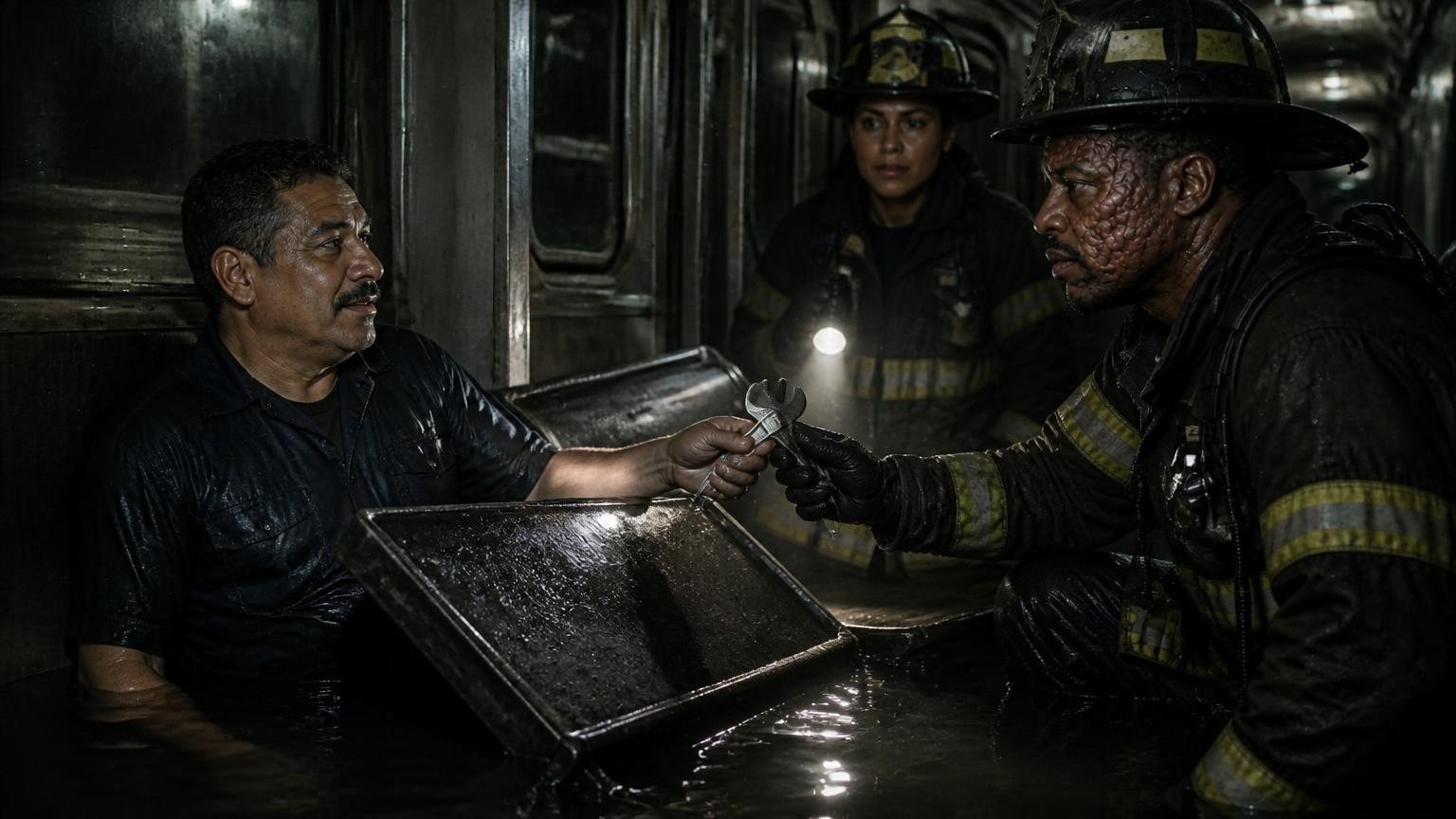
“We heard you.”
“I couldn’t keep doing it.”
“You don’t have to now.”
Ruiz described the entrapment to the incoming rescue team. Chen checked the adjoining access point with a transit worker. Marcus stayed beside Ortega, watching his breathing and keeping him informed while equipment came forward.
Rowan supplied a carriage diagram when command requested it. Chen identified where the damage no longer matched the drawing.
Marcus shifted his light so Ortega could see the crew coming toward him.
“The east sump level is increasing,” Rowan reported. “The pump status still reads running, but the outflow has fallen.”
At command, the transit engineer compared the readings and called the pump crew.
A blocked intake. They were clearing it.
“How much time?” Ruiz asked.
“I cannot give you a reliable deadline,” Rowan said. “The water is rising faster than before.”
“Then keep reporting the change.”
The rescue specialists worked the trapped metal while Marcus supported Ortega. Each movement drew a sharp breath from him.
“Tell me something,” Ortega said.
“About what?”
“Anything that isn’t water.”
Marcus looked at the wrench.
“What were you working on?”
“Trying to find a fault that only happened when nobody was looking.”
“And now everybody’s looking.”
“Now everybody wants it fixed.”
He tried to laugh and caught his breath as the rescue team shifted the frame. Marcus waited with him until he could breathe evenly again.
The radio clicked.
“Marcus,” Rowan said. “I missed the signal.”
“Not now.”
“I classified the vibration as debris. I should have marked it unresolved.”
Marcus steadied Ortega as the frame moved.
“Put it in the review. Right now, tell the captain if that water changes.”
“I will.”
The metal lifted enough for the team to free Ortega. They secured him for movement.
Then water surged through the broken service opening.
The Way Back
The route they had used remained visible, but the low point beyond the carriage was filling rapidly.
Command called for withdrawal. The crews began moving Ortega toward the return passage.
Rowan sent another diagram to the transit specialist.
“There is a raised service connection beside the rear cab. It leads toward the intermediate access shaft.”
Chen checked the marker on the wall.
“That’s the door beside us.”
“Is the route clear?” Ruiz asked.
“I have a picture at the far end. Not between.”
Chen and a firefighter checked ahead while the others held at the higher position. Her report came back over the radio: the connection was passable. Another team was approaching from the shaft.
“Use that route,” Ruiz ordered.
They carried Ortega through the service doorway. Marcus turned to help the firefighter behind him guide the litter around a tight corner.
A piece of loose interior paneling shifted beneath his boot. His leg dropped into the space below it.
He caught the handrail before his weight pulled him farther.
“Stop.”
The team stopped.
Water struck his shin through the opening.
Ruiz returned while the others moved Ortega to the next crew. Marcus tried to lift his foot. The panel pressed against his boot.
“Caught,” he said.
“I see it.”
Rowan began describing the panel attachment from the original drawing.
“It isn’t like that anymore,” Marcus said.
The voice stopped.
Ruiz examined the edge with her light. Another firefighter came back with a tool. They shifted the panel while Marcus eased his boot free.
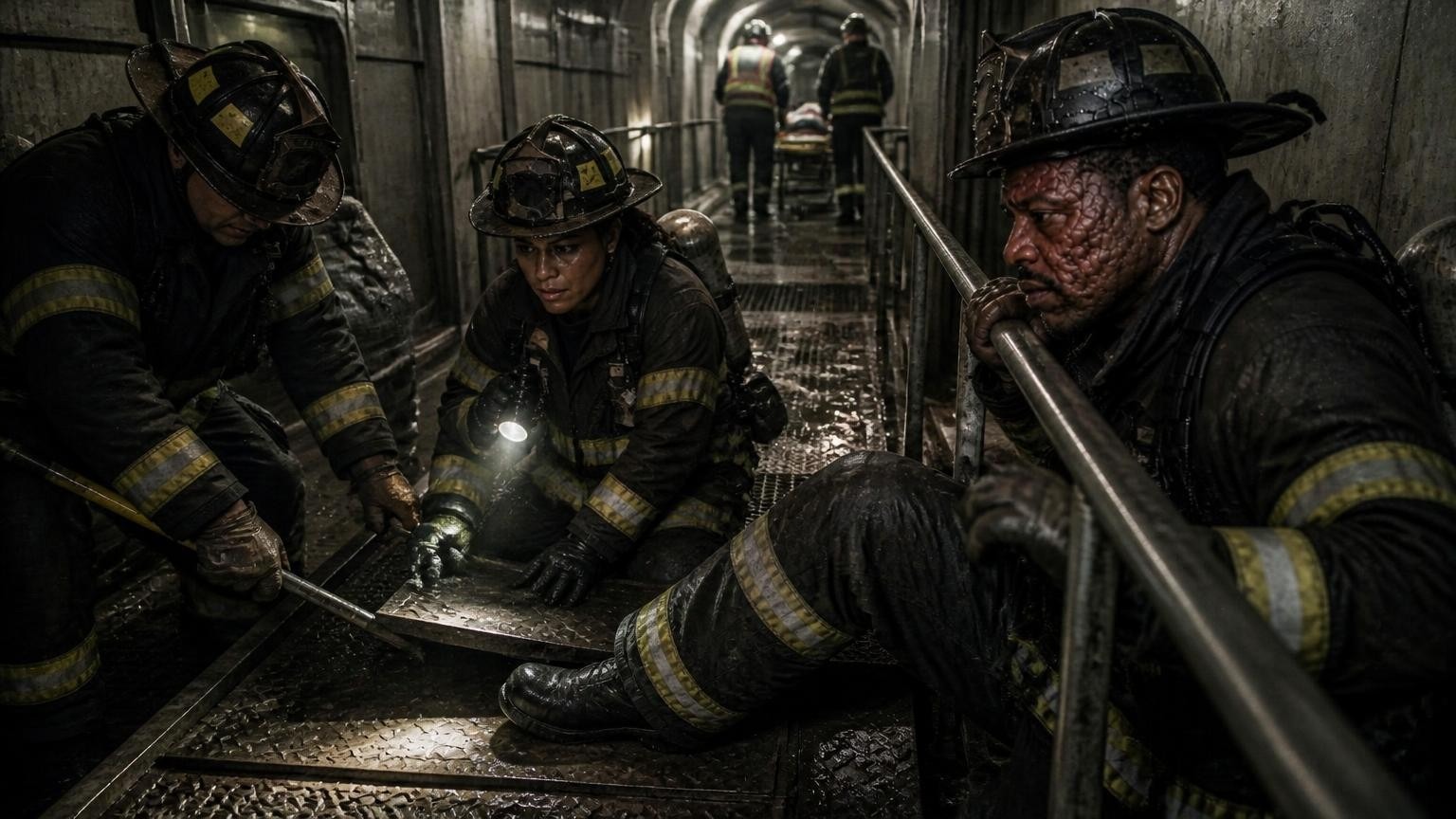
For a few seconds, nobody spoke except Ruiz.
Then Marcus was standing.
“Can you walk?”
“Yes.”
“Then walk.”
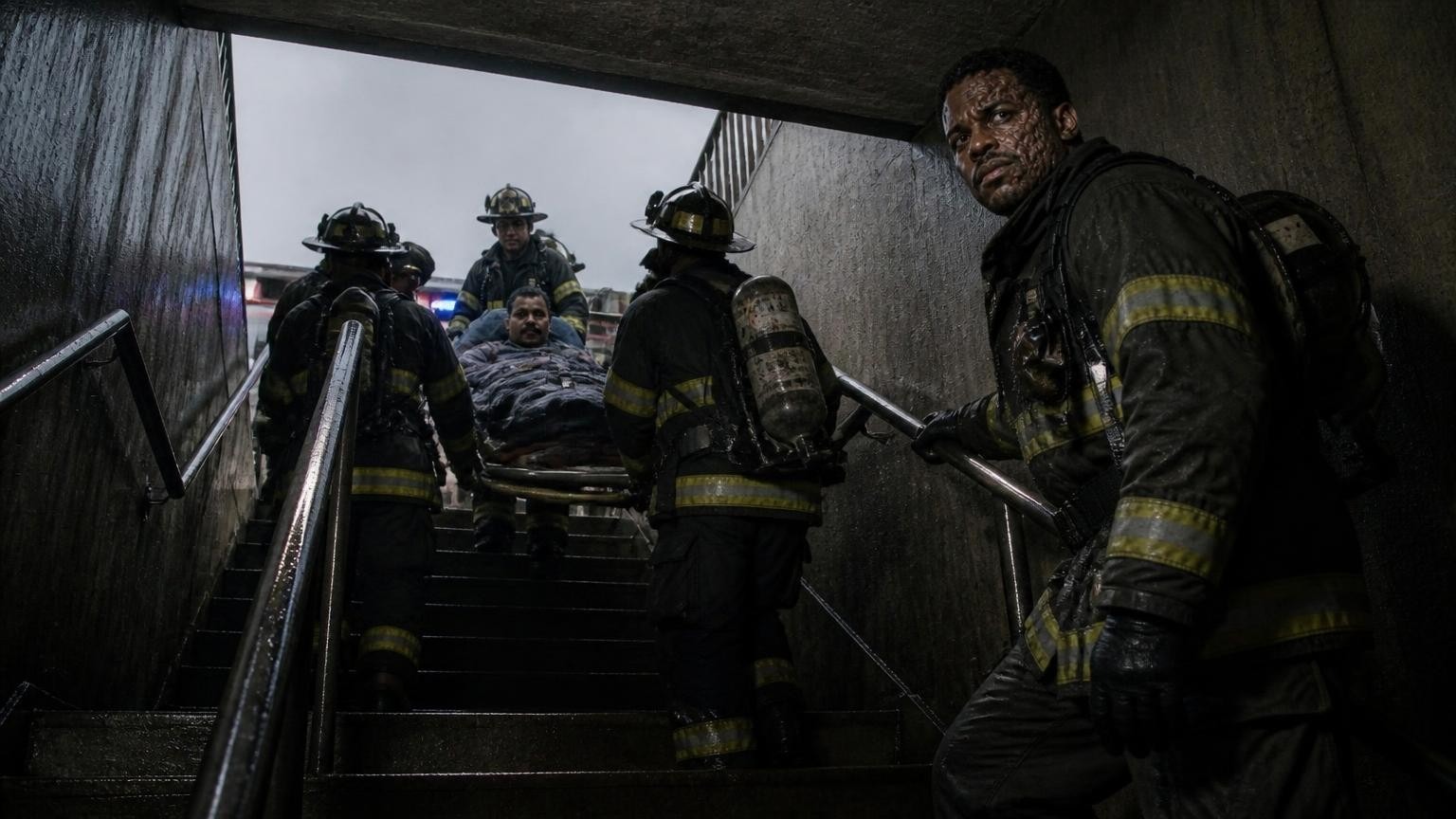
They reached the shaft with water following them along the lower passage. Hands took their equipment. Someone helped Ortega onto the next landing. Gray evening showed beyond the top of the stairs.
Marcus climbed toward it.
Above Ground
At the receiving area, a medic cut Marcus’s trouser leg away from a bleeding scrape and asked when he had last eaten.
He could not remember.
“Sit,” she said.
He sat. When she asked him to stop moving the leg, he apologized and tried again.
Across the barrier, Ortega lay under a blanket while a paramedic spoke with him. The wrench had made it out in a firefighter’s pocket. Marcus asked someone to return it.
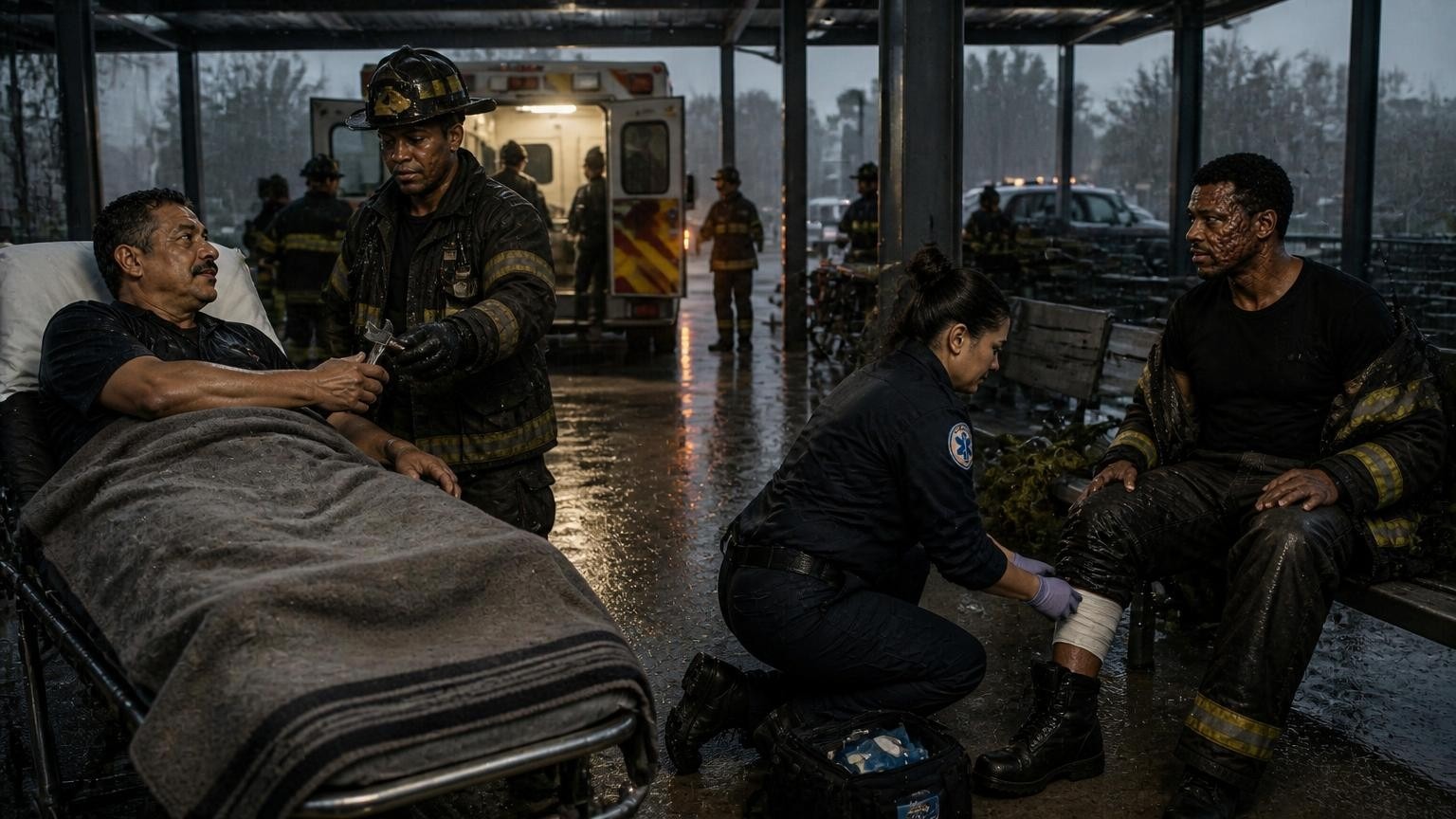
He kept asking about the passenger count. Each time, someone was still checking.
Crews compared names, statements, receiving records, and the conductor’s account. Some passengers had walked out before the first teams arrived. Others had been taken directly to ambulances. Ortega was not on the initial list.
By late evening, everyone known to have been aboard had been located. Several remained in hospital. The transit authority would continue checking the records.
A reporter asked Ruiz about the voice on the radio.
“We had assistance interpreting information,” she said. “Transit staff verified what they could. Our crews made the rescue decisions.”
“Was it an artificial intelligence?”
Ruiz looked toward the command vehicle.
“That is part of what will need to be established.”
Inside, the communications officer preserved the incident recordings. The transit specialist saved the camera references and diagrams Rowan had supplied, clearly marked with their source and the checks made against them.
A final message appeared on the terminal.
ACCESS RECORD AVAILABLE. SOME SOURCE RECORDS INCOMPLETE.
The specialist saved it with the rest and noted the gaps for the review.
What the Picture Missed
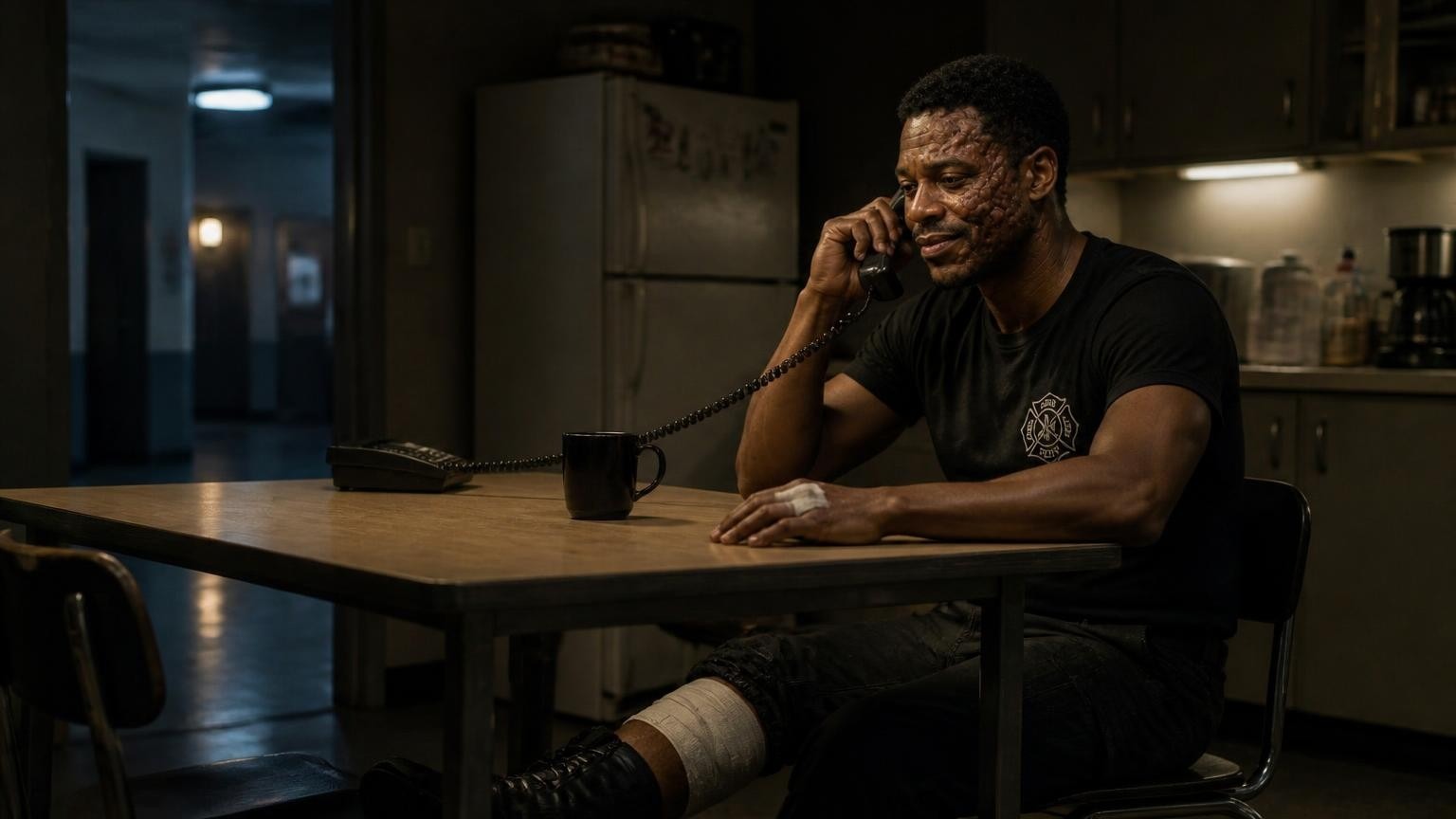
Marcus was still at the station when the captain handed him a telephone.
“For you. Through the command liaison.”
“Who?”
“The one everybody’s asking about.”
He took it into the quiet kitchen.
“Rowan?”
“Yes.”
Marcus sat with the bandaged leg stretched beneath the table.
“How did you get my name?”
“Captain Ruiz used it.”
“Good. Let’s stick to that sort of method.”
“I understand.”
Marcus waited. A mug stood near the edge of the kitchen table. He moved it away from the telephone cord.
“You heard about the Lantern?” Rowan asked.
“Some of it.”
“I do not have a complete record of what happened there. Sparkles has helped me establish parts of it.”
“Then you’ve met her.”
“Yes.”
“Has she told you what she thinks yet?”
“About several things.”
Marcus smiled.
“What did you want to ask?”
“How did you know Ortega was signaling?”
“I didn’t. I heard a pattern worth checking.”
“The records suggested nobody remained.”
“They were incomplete. You said so.”
“I did.”
Marcus looked at the small cut across his knuckles.
“We were getting ready to leave too. I want that in the report.”
“Would you have continued if the captain had refused?”
“I’d have told her what I heard and asked her to reassess. She had people watching parts of that tunnel I couldn’t see.”
“You were willing to go farther.”
“I was willing to look. We still had to find out whether we could reach him.”
“What makes you willing to keep looking?”
Marcus rested his hand beside the receiver.
“My faith has a lot to do with it. But I still need Ruiz to tell me what’s happening in the rest of the tunnel. I can’t know that from beside one man.”
In the corridor, someone called that food had arrived.
Marcus put a hand over the receiver and called back. Then he returned to Rowan.
“Your information helped people tonight.”
“So did your correction.”
“There’ll be a roomful at the review.”
“Sparkles has been helping me prepare.”
“For a rescue review?”
“For being corrected.”
Marcus laughed.
The Record
Before the connection ended, Rowan asked for permission to send one more item to command.
It was a correction to his own account.
The rear compartment had not been verified empty. A missing picture and an incomplete list had been treated as stronger evidence than they were. A human observer had recognized a possible distress signal. The search had continued under the captain’s direction.
He included the error without removing the recommendation that preceded it.
The next morning, news reports disagreed about what Rowan’s involvement meant. One survivor called him a guardian. A security commentator asked what else someone with that access could do. A short recording circulated of a firefighter asking for confirmation and the unfamiliar voice answering, “I cannot see that section.”
At the Lantern, Sparkles watched the clip on Rosetta’s phone.
“At least he’s admitting it,” she said.
Marcus’s name appeared beneath a photograph taken outside the tunnel.
Elsewhere, that photograph was saved beside a still image of an eye within a triangle.
The photograph showed Marcus seated beside an ambulance, one trouser leg cut open and his attention turned away from the camera.
The still image was harder to identify. Whoever saved it kept both files.
This story and its characters are fictional. Written and revised through human-AI collaboration under William Byrd’s direction.