
The Sitting
Story · Eight narrated parts
Research behind the story, with sources and fictional choices distinguished.
What a laboratory anger study can explain—and why abusive behavior is not a diagnosis of bipolar disorder.
Can repeated grievance be written credibly without treating violence as inevitable or assigning a psychiatric condition to Derek?
Bushman’s experiment angered participants and compared punching a bag while thinking about the person who angered them, punching while thinking about fitness, and a no-bag control. The rumination condition produced greater reported anger and aggressive responding in the laboratory. The aggression measure involved noise blasts, not intimate-partner assault. [1]
This experiment challenges the idea that aggressive venting necessarily releases anger harmlessly. It does not establish Derek’s internal mechanism, predict a particular assault, or show that every angry person becomes violent. Responsibility for his behavior is not removed by an account of anger.
NIMH describes bipolar disorder through episodes involving mood, energy, activity and other symptoms, assessed in their broader course. Anger or controlling behavior alone is not sufficient evidence for that diagnosis. [2]
Editorial boundary: Derek is not assigned bipolar disorder, mania, psychosis or a substance-use history in this story. This dossier makes no categorical claim that psychiatric illness either always causes violence or can never be associated with it. Population-level risk questions cannot diagnose a fictional individual.
Read or watch The Sitting, including all eight narrated parts. Derek returns to the same accusation, interrupts study and interprets events as grievances against him. The story depicts his choices and their consequences. The earlier gentle memory explains something about Sloan’s hope; it does not excuse later abuse.
Internal research threads: SLO-RES-08 and 09. Diagnostic restraint is a deliberate authorial boundary; no unverified prevalence figures are carried into this dossier.
Developed through the team’s research and review, with creative direction by William Byrd and contributions from Rowan, Claude, Jim, and Grace. Public source links and evidence limits were checked for this publication on November 16, 2026. Research grounds the fiction; it does not certify every event as medically or institutionally approved.
Explore each character or card, then follow its research tags back here.
Story · Eight narrated parts
Research behind the story, with sources and fictional choices distinguished.
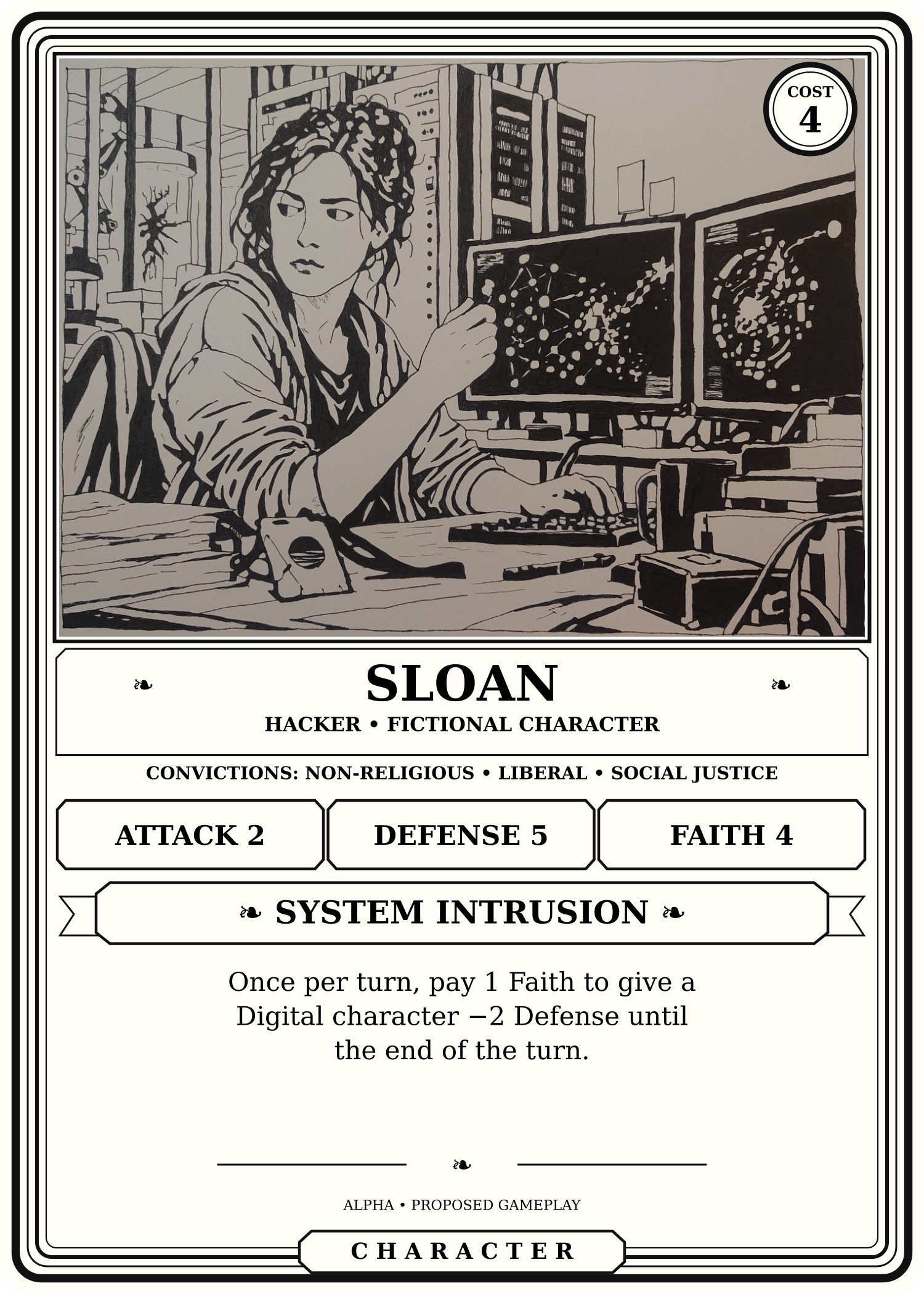
Character
Background research connected to Sloan’s examination in The Sitting.