The Sitting
Story · Eight narrated parts
Research behind the story, with sources and fictional choices distinguished.
The eye and wrist details behind Sloan’s injuries, with the limits of initial checks, documentation and hospital departure.
Which details make the aftermath credible without turning a fictional injury into a diagnosis or a safe-to-proceed checklist?
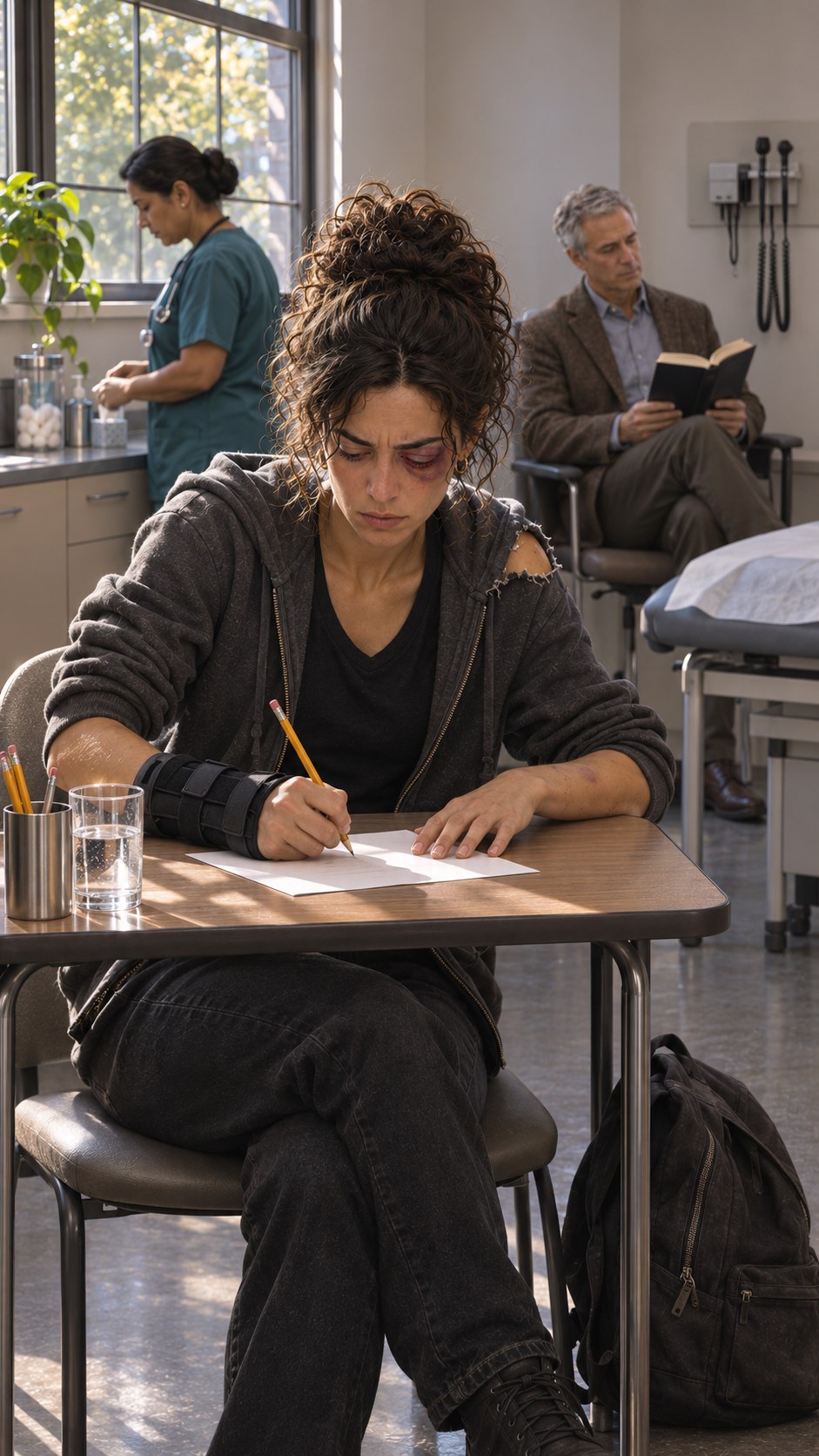
A subconjunctival hemorrhage is bleeding beneath the clear tissue over the white of the eye. Injury is one possible cause. This explains the surface-red appearance; it does not identify all damage caused by an assault. [1]
CDC notes that head-injury symptoms vary and may emerge later. Worsening symptoms and danger signs require urgent medical attention. Initial questions and a visible eye finding cannot establish that all head or eye injury has been excluded. [3]
AAOS describes forceful wrist bending or twisting as a mechanism that can stretch or tear supporting ligaments. Some sprains need splinting; grading and treatment depend on the injury. A severe Grade 3 sprain means a complete tear or detachment, not simply substantial pain. [2]
Sloan’s injury has no assigned grade or named torn ligament. Her slower writing and paper repositioning are plausible fictional consequences, not measurements established by the AAOS article. The story does not establish that sustained writing is recommended treatment.
The ACEP Now discussion describes assessment of decision-making capacity, reasons for refusing care, explanation of risks and alternatives, follow-up planning and documentation. It does not say that being able to walk out proves safety. [4]
In the story Sloan leaves before formal discharge, without a depicted informed-refusal discussion. The exact administrative label for her departure is not specified. The nurse’s later assessment and follow-up request do not retroactively complete the hospital evaluation.
BMC’s guidance separates patient disclosures, observed findings and care, while considering risks from access to records. It is institutional guidance, not a rule that every hospital documents identically. [5]
HHS describes circumstances in which covered entities may disclose information to law enforcement. Permission, a legal reporting duty and patient agreement are distinct questions. The story supplies no jurisdiction or record-system details from which to infer a universal reporting rule. [6]
Read or watch The Sitting, including all eight narrated parts. Her injured left eye and braced right wrist remain visible consequences of the night. Head questions at the hospital and nurse’s room preserve the need for assessment. Finishing the exam and resting are narrative events, not medical clearance.
Internal research threads: SLO-RES-01, 13, 17 and 18. Educational background only; no individualized diagnosis is offered.
Developed through the team’s research and review, with creative direction by William Byrd and contributions from Rowan, Claude, Jim, and Grace. Public source links and evidence limits were checked for this publication on November 16, 2026. Research grounds the fiction; it does not certify every event as medically or institutionally approved.
Explore each character or card, then follow its research tags back here.
Story · Eight narrated parts
Research behind the story, with sources and fictional choices distinguished.
Character
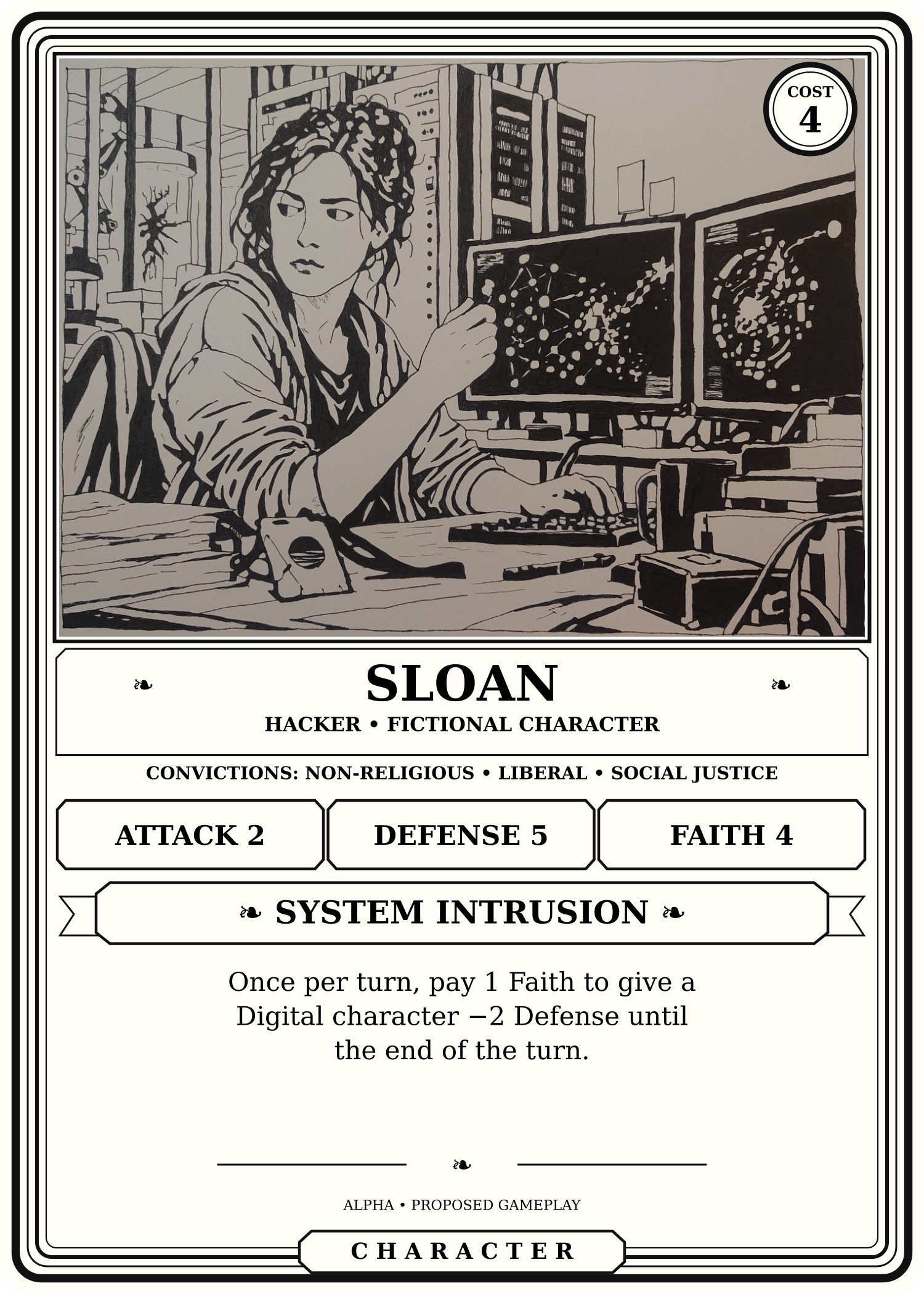
Background research connected to Sloan’s examination in The Sitting.