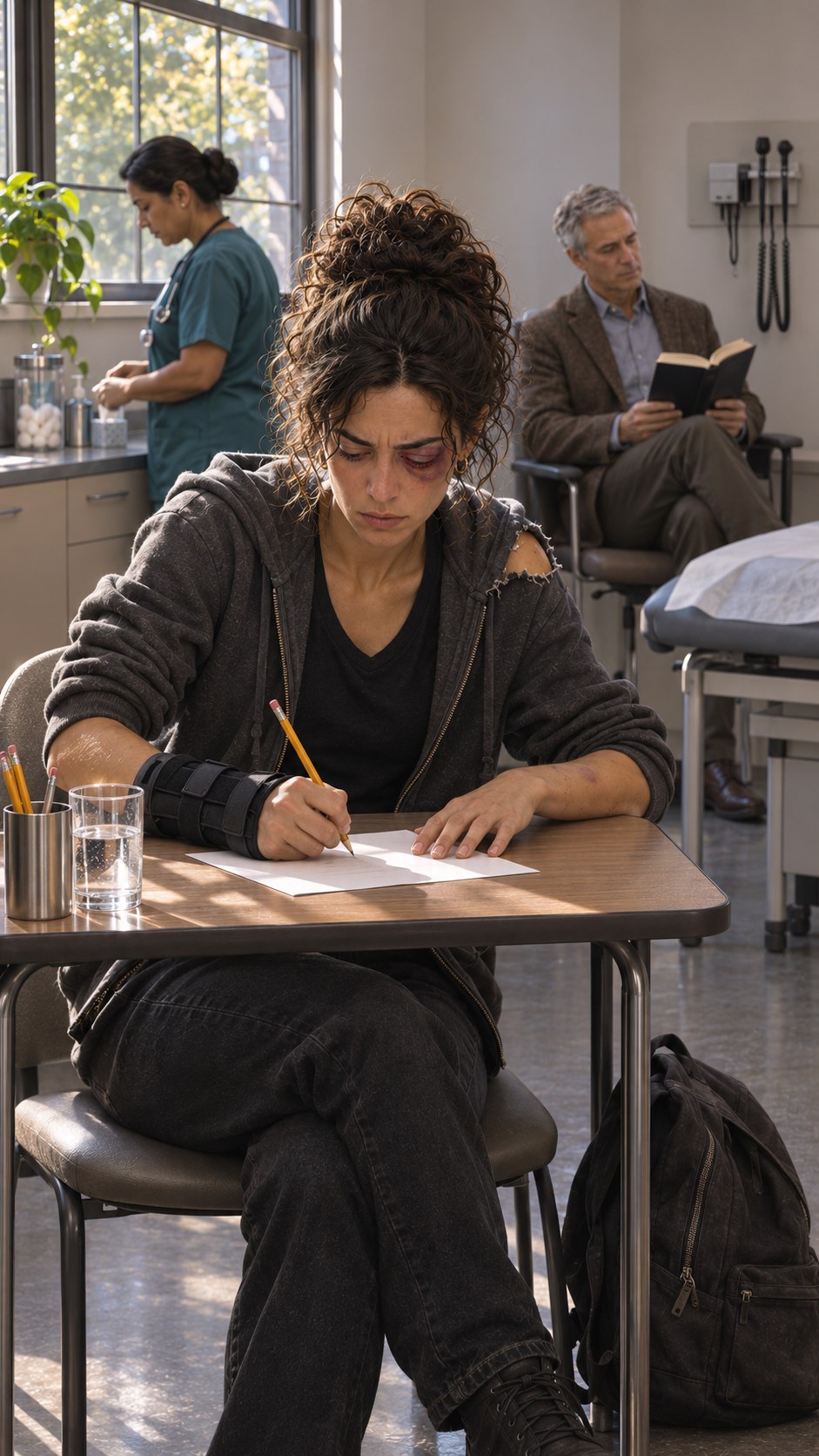
The Sitting
Story · Eight narrated parts
Research behind the story, with sources and fictional choices distinguished.
Why familiar work can become slower and error-prone after lost sleep, without treating determination as immunity to injury or fatigue.
How can Sloan remain technically capable while ordinary reading, remembering and writing require much more effort?
NHLBI explains that sleep deficiency can interfere with attention, learning, memory, decisions and problem-solving. Tasks may take longer and contain more mistakes. These effects support showing effort and errors rather than assuming a tired person’s knowledge has disappeared. [1]
SAMHSA’s TIP 57 describes varied emotional, cognitive and physical reactions after trauma. Exposure does not by itself establish a particular disorder or a single predictable response. [2]
Neither source determines Sloan’s examination score, how long she can write, or the combined size of sleep-loss, stress and pain effects. They do not establish a protective “tunnel focus” mechanism that makes an injured person safe or unusually effective. No PTSD or acute stress disorder diagnosis is assigned to Sloan.
Read or watch The Sitting, including all eight narrated parts. She rereads a question, loses part of a sentence, repeats words and corrects a value copied from the wrong column. Her computer-repair experience still helps her reason through the fourth problem. These are authored details informed by general evidence; they are not a clinical case study. The exam result remains unknown.
Internal research threads: SLO-RES-10 and 11. The original broad claims about precise stress physiology and guaranteed compartmentalization are not presented as established findings.
Developed through the team’s research and review, with creative direction by William Byrd and contributions from Rowan, Claude, Jim, and Grace. Public source links and evidence limits were checked for this publication on November 16, 2026. Research grounds the fiction; it does not certify every event as medically or institutionally approved.
Explore each character or card, then follow its research tags back here.
Story · Eight narrated parts
Research behind the story, with sources and fictional choices distinguished.
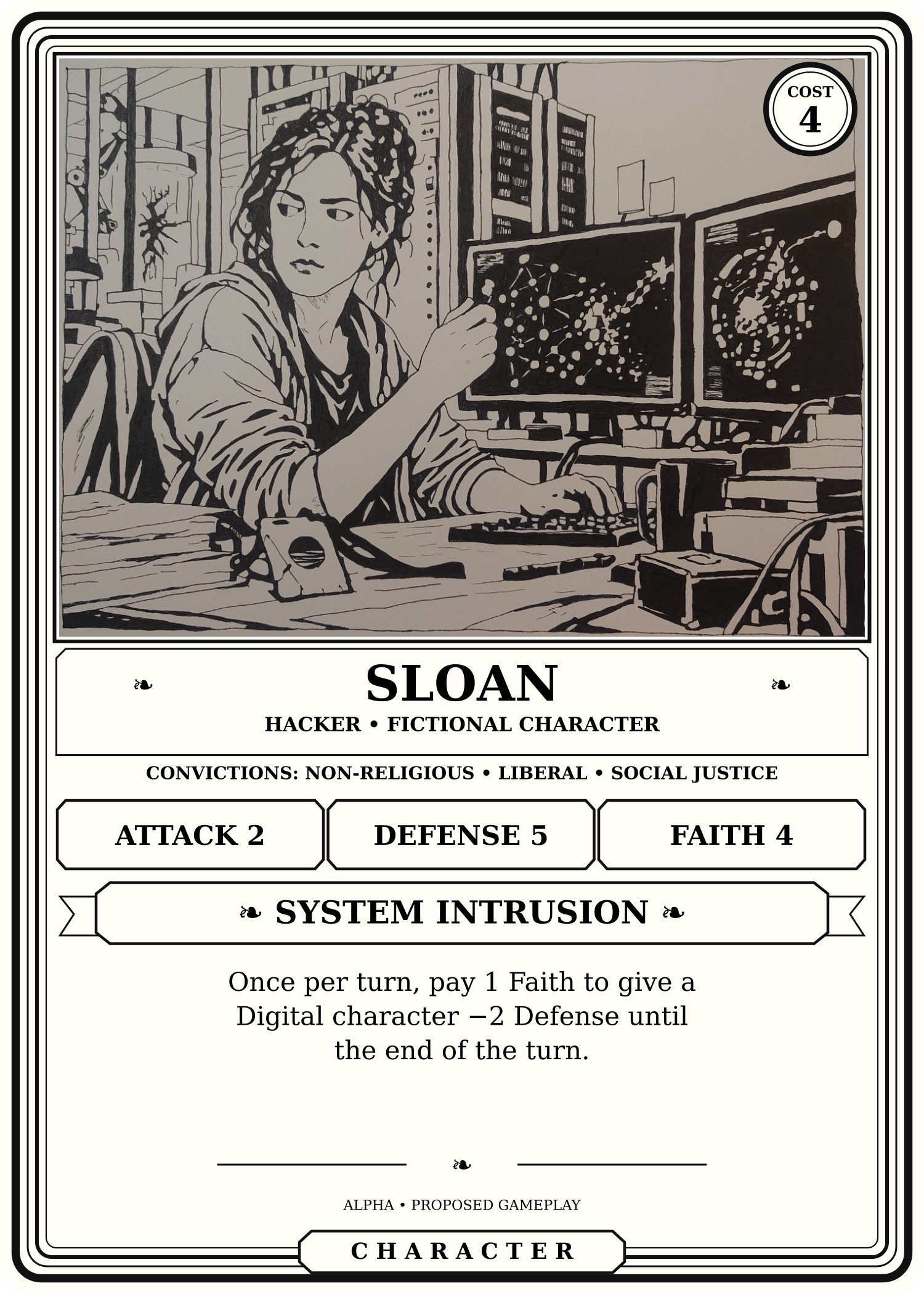
Character
Background research connected to Sloan’s examination in The Sitting.