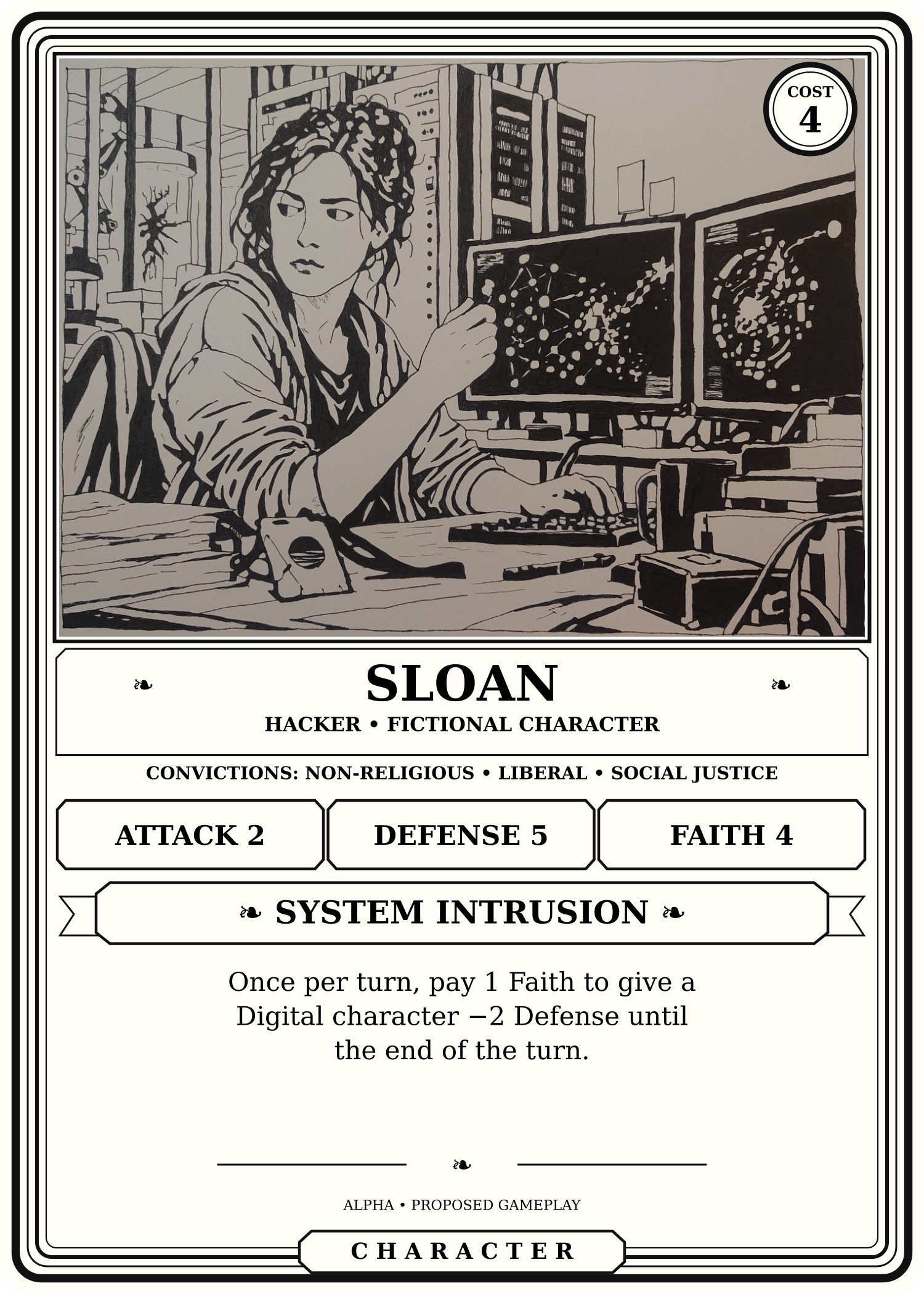
Mira Sloane (Sloan)
Character
Her discovery of concealed deletion routines creates an authored crisis of complicity, guilt, and responsibility. This is not a clinical assessment; her routing changes and later disclosures are distinct actions.
Separate concepts for discussing disclosure, interference with systems, and distress about perceived moral transgression—with limits on what the cited research establishes.
How can disclosure, interference with systems, and moral distress be discussed without treating them as the same action or a diagnosis?
Whistleblowing, sabotage, and moral injury are separate concepts. An ethical conflict, action taken in response to it, and a person’s distress do not automatically establish a clinical condition.
Litz and colleagues present a preliminary model and intervention strategy concerning moral injury in war veterans. Its military context matters: it is not a direct study of corporate engineers, architects, or whistleblowers. [1]
Miceli and Near’s organizational book addresses whistleblowing as a separate subject. The linked bibliographic record identifies the work; it does not establish a particular psychological outcome in an individual. [2]
Disclosure of perceived wrongdoing and unauthorized interference with a system should be described separately. Moral-injury research offers a lens for discussing perceived transgression and responsibility, not a label that automatically follows from either action.
Responses vary widely. A conflict of values does not prove acute moral injury, and neither a fictional scene nor a bibliography substitutes for clinical assessment. Claims about outcomes among corporate whistleblowers require research actually studying that population.
The preliminary clinical model and organizational book have different purposes. Keep each source’s scope visible, and distinguish authored motivation from a finding about a studied population.
Adapted from the reviewed Mira Sloane canonical master. Website adaptation: October 24, 2026. Version 1.0. This is educational research for fiction, not a clinical evaluation. Character applications appear separately.
Explore each character or card, then follow its research tags back here.
Character
Her discovery of concealed deletion routines creates an authored crisis of complicity, guilt, and responsibility. This is not a clinical assessment; her routing changes and later disclosures are distinct actions.