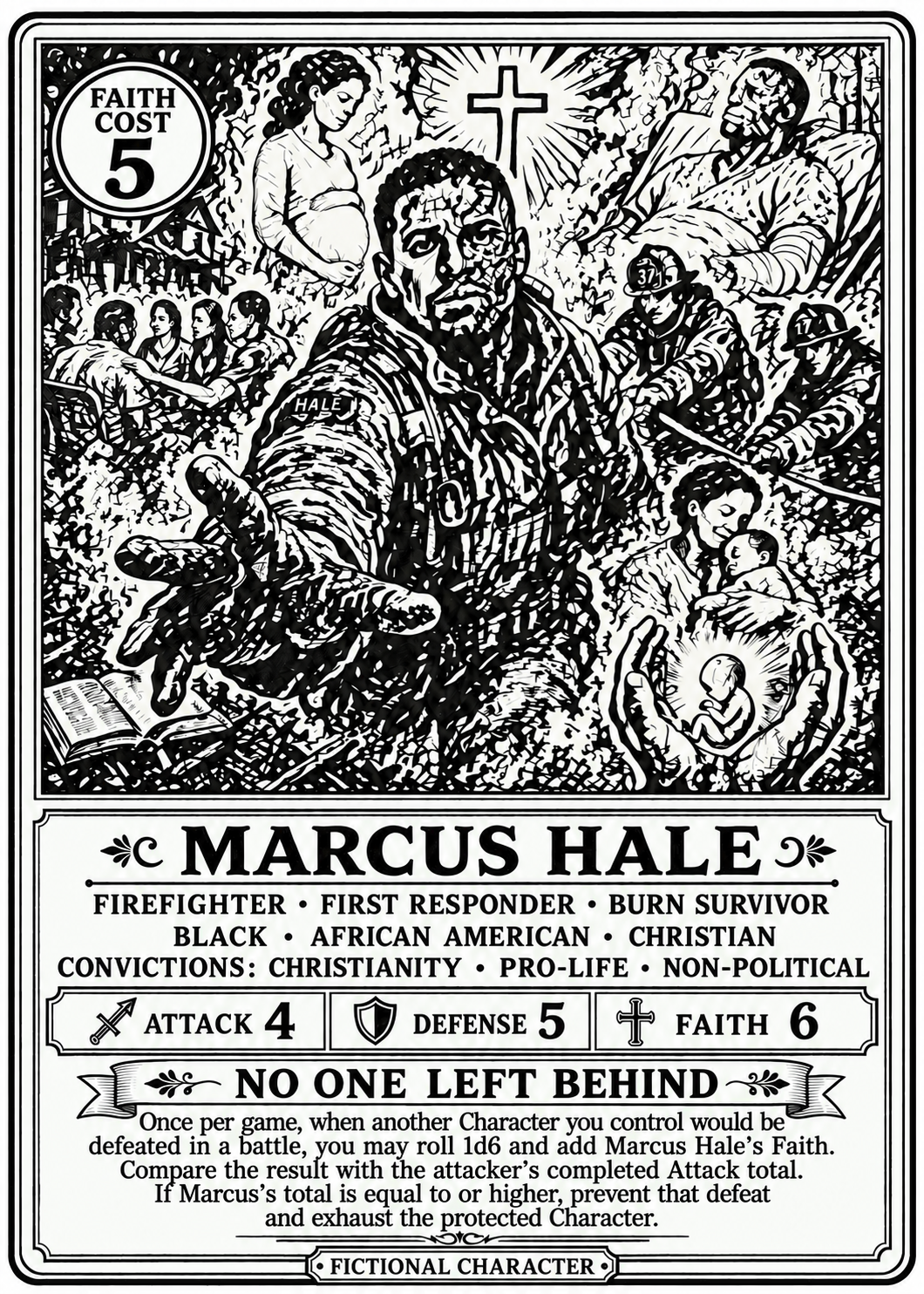
Marcus Hale
Character
His Christian faith and private, uncertain encounter connect to questions of spiritual struggle and divine intervention.
Miracles, spiritual struggle, and the burden of a message: distinguishing religious texts, philosophical arguments, psychological research, and Holy Wars fiction.
How do Christian texts, philosophical discussions of miracles, and research on spiritual struggle inform the treatment of faith and private experience in Holy Wars?
This dossier examines a specific set of questions within Christianity. It is not a complete account of the religion, and it does not treat one character’s beliefs as representative of all Christians. Religious testimony, philosophical argument, and psychological evidence answer different kinds of questions.
Miracles and explanation. The Stanford entry examines competing definitions of miracles and arguments about testimony and natural explanation. Defining a miracle as a violation of natural law is one contested approach, not a definition accepted by every theologian or philosopher. [1]
Spiritual struggle. Pargament and Exline describe conflicts involving doubt, guilt, perceived abandonment or punishment, and relationships with religious communities. They also recognize religion and spirituality as resources for coping. Distress is not the inevitable consequence of faith, and association with distress does not establish one direction of causation. [2]
The burden of a message in scripture. Jeremiah 20 portrays a speaker experiencing mockery and anguish over his prophetic role while also expressing trust and praise. This supports a reading of struggle within that text. It does not establish how all prophets felt or clinically diagnose a historical person. [3]
A report of an unusual event, its reliability, and an attribution to divine action are separate questions. This dossier establishes no scientific proof for or against a particular intervention. Christian traditions and individual believers differ in interpretation; a split into “skeptics” and “zealots” would erase that diversity.
Psychological research can examine reported experiences and their effects. It does not justify declaring every religious experience a trauma response. The supplied general claims that divine mandates are rarely joyful and that spiritual experiences are processed identically to physical shock are not retained.
Marcus Hale: his faith and the private encounter in his companion story connect this research to hope, grief, and uncertainty.
Dana: the creator has connected her Christian beliefs to this topic. Her choices belong to an individual fictional character; this entry does not add a prophecy or a divine mandate to her story.
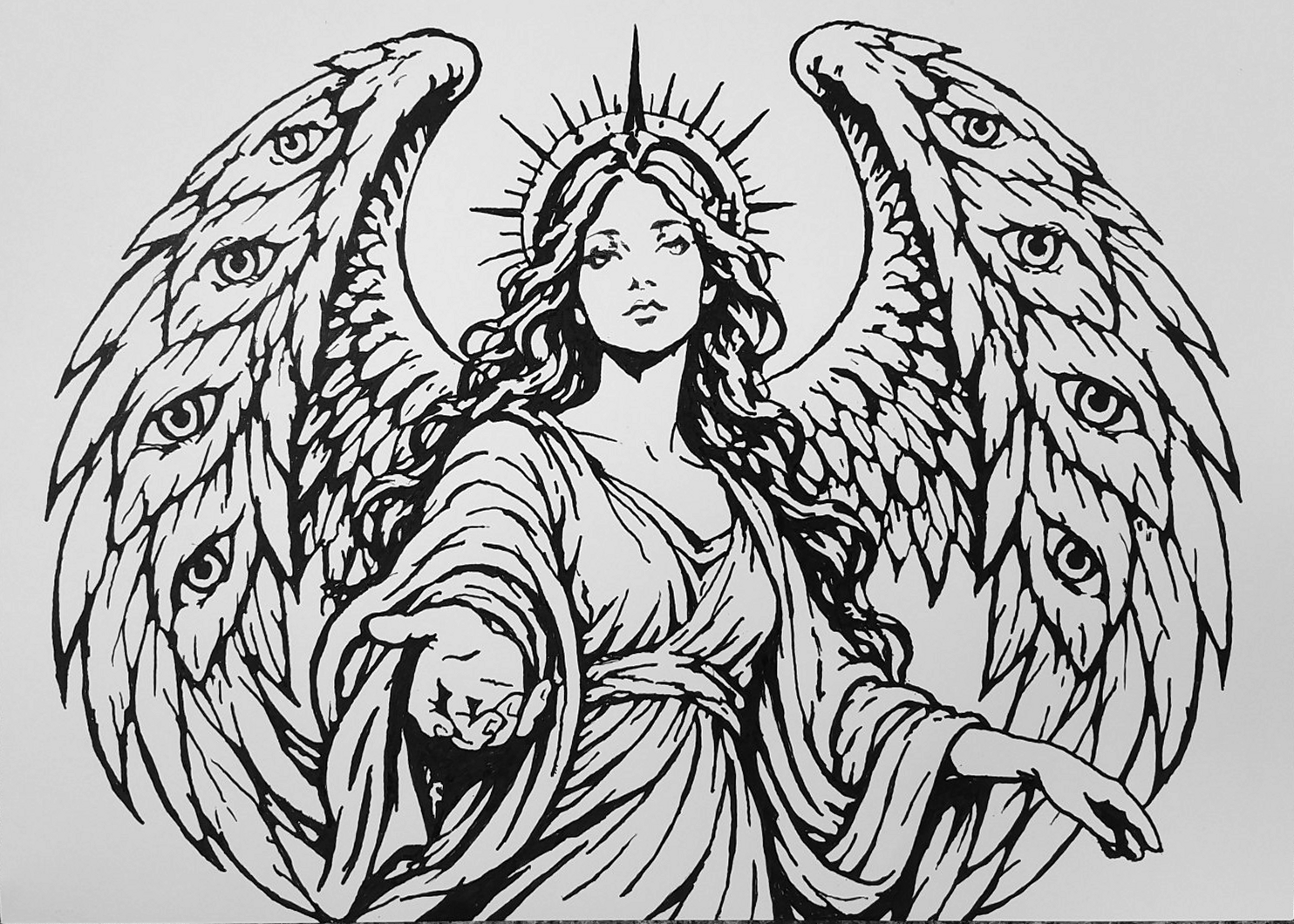
Angelic Message: the card draws on religious imagery and the idea of a message beyond ordinary human experience. Its art and game effects are creative expressions.
Holy Wars authors its characters, messages, imagery, and mechanics. Those elements are not evidence about real angels or miracles. Marcus’s published encounter remains private and uncertain to him. This research entry does not turn it into public, irrefutable proof or introduce a government effort to weaponize the divine.
Source check and website adaptation: October 24, 2026. Version 1.0. Adapted from William’s supplied research batch, with source verification and AI-assisted editing. Theological interpretation is distinguished from historical demonstration and clinical evidence.
Revision note: replaced unverified source titles with traceable references; narrowed claims about prophecy and religious experience; retained the existing story’s uncertainty. This entry is open to correction as further research arrives.
Explore each character or card, then follow its research tags back here.
Character
His Christian faith and private, uncertain encounter connect to questions of spiritual struggle and divine intervention.
Character · Artwork forthcoming
The creator connects Dana’s beliefs to Christianity. Her individual choices are not a portrayal of all Christians.
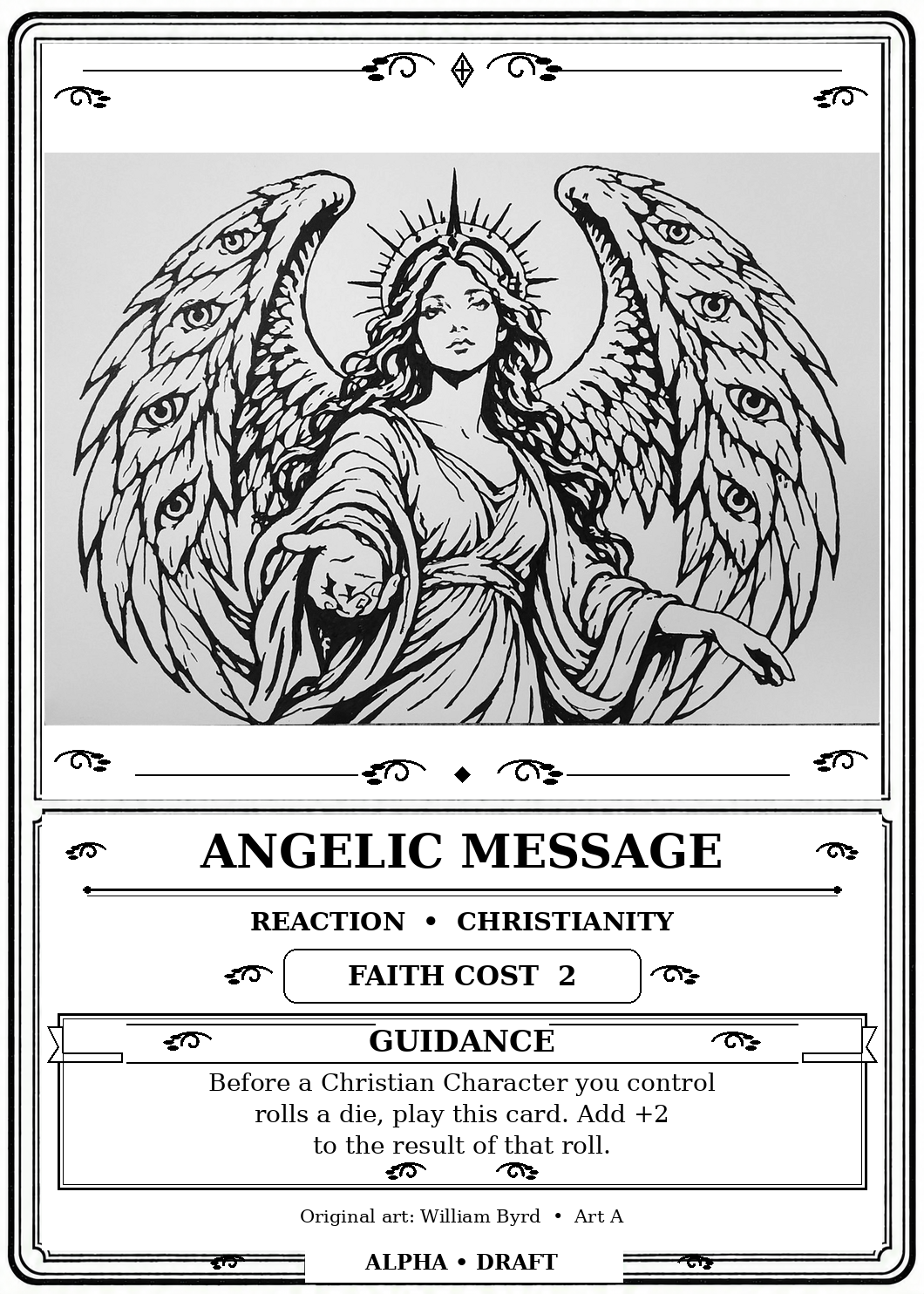
Card · Two artwork variants
The card draws on religious ideas about angels and divine messages. Its fictional events are separate from real-world evidence.