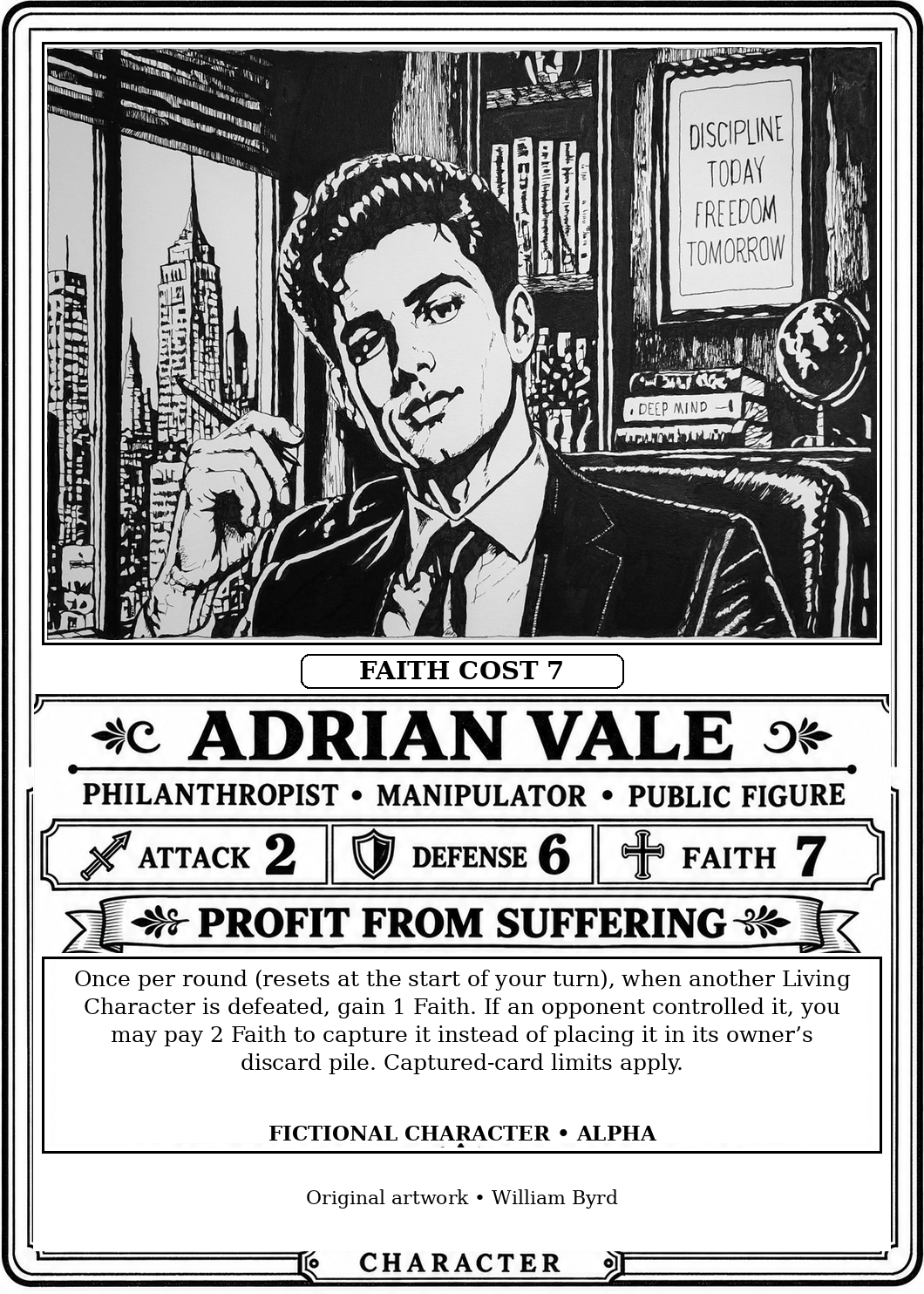
Adrian Vale
Character
Vale uses public admiration to conceal his fictional criminal network. This is an authored application of reputation and manipulation themes, not a diagnosis or a claim about real philanthropists.
What a personality-trait measure can tell us, what it cannot establish about philanthropy, and why reputation is not a diagnosis.
What can research on manipulative traits contribute to discussing reputation, and where do claims about philanthropy exceed the cited evidence?
Research on manipulative personality traits offers concepts for discussing self-serving behavior. The cited personality measure does not establish that charitable activity conceals wrongdoing or that philanthropists share a particular personality profile.
Jones and Paulhus developed and validated the Short Dark Triad, a brief measure of Machiavellianism, narcissism, and psychopathy. It studies these trait constructs; it is not an assessment of philanthropic corruption or a test of successful audience manipulation. [1]
Impression management is a separate interpretive concept here, not one of the three SD3 traits. A public reputation, charitable act, or fictional biography cannot substitute for an assessment or establish a clinical diagnosis.
This dossier does not infer personality pathology from charitable activity or generalize a fictional criminal scheme to treatment providers. A direct empirical claim about philanthropy would require evidence studying that setting.
Martha Stout’s book is retained as contextual reading about interpersonal manipulation. A publisher description confirms the book’s identity; it does not verify every claim in the book or supply an empirical study of philanthropy. [2]
Adapted from the reviewed Adrian Vale canonical master. Website adaptation: October 24, 2026. Version 1.0. Fictional applications appear separately in the character connections.
Explore each character or card, then follow its research tags back here.
Character
Vale uses public admiration to conceal his fictional criminal network. This is an authored application of reputation and manipulation themes, not a diagnosis or a claim about real philanthropists.